


| Quantity: | |
|---|---|
PSA (Pressure Swing Adsorption) is a proven gas separation technology based on the differential adsorption rates of gas molecules onto a porous adsorbent (e.g., Carbon Molecular Sieves) under varying pressure. In nitrogen generation, compressed air is fed into a vessel where oxygen is preferentially adsorbed at high pressure, allowing nitrogen to flow out. The system employs dual alternating towers – one adsorbing while the other regenerates – to ensure a continuous, uninterrupted supply of nitrogen at the desired purity and flow rate, without the need for external consumables.
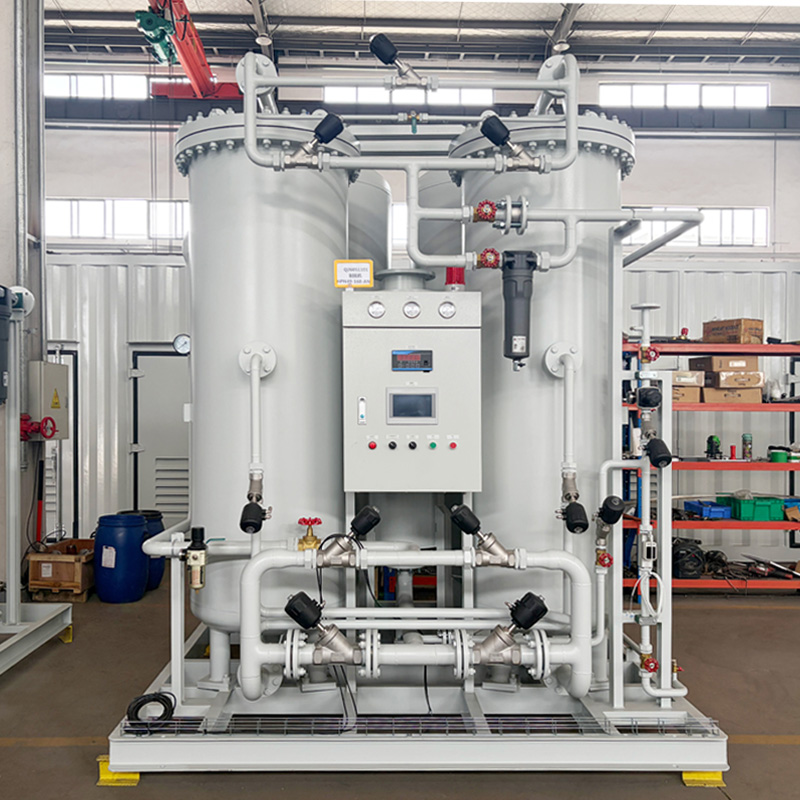
Ultra‑High Purity (99.99%) for Flawless Cutting
The 99.99% nitrogen purity ensures an inert atmosphere that completely eliminates oxidation during laser cutting. This delivers burr‑free, bright cut surfaces with minimal discoloration, reducing or even eliminating secondary finishing operations.
Generous Capacity – 160 Nm³/hr
This flow rate supports multiple high‑power laser cutting machines simultaneously, making it ideal for medium‑to‑large fabrication shops. It provides ample margin for peak‑load demands without pressure drop.
True 24/7 Uninterrupted Operation
The dual‑tower PSA design alternates adsorption and regeneration cycles, guaranteeing a continuous nitrogen stream – even during shifts, weekends, or holidays. No more production stoppages caused by empty cylinders or delayed liquid deliveries.
Intelligent PLC Control with Auto‑Venting
Equipped with a fully automatic control system, the generator continuously monitors purity and flow. If purity ever drifts below 99.99%, the unit automatically diverts off‑spec gas to vent, protecting your laser optics and workpiece quality.
Rapid Start‑Up & Flexible Adjustment
Reaches operating purity within 15‑30 minutes from cold start. The purity can be fine‑tuned across a wide range (though 99.99% is standard for laser cutting), allowing you to adapt to different material thicknesses or cutting speeds.
Low Maintenance & Long Service Life
The proprietary CMS (Carbon Molecular Sieve) loading and compaction technology ensures high adsorption efficiency and extends sieve lifetime. With rugged construction and high‑cycle valves (rated for 1 million switches), maintenance intervals are long and costs are minimal.
Dramatic Cost Reduction
On‑site generation cuts nitrogen costs by up to 90% compared to cylinder or liquid nitrogen supply. Eliminate rental fees, transportation charges, storage losses, and labor for cylinder handling – a single capital investment yields rapid payback.
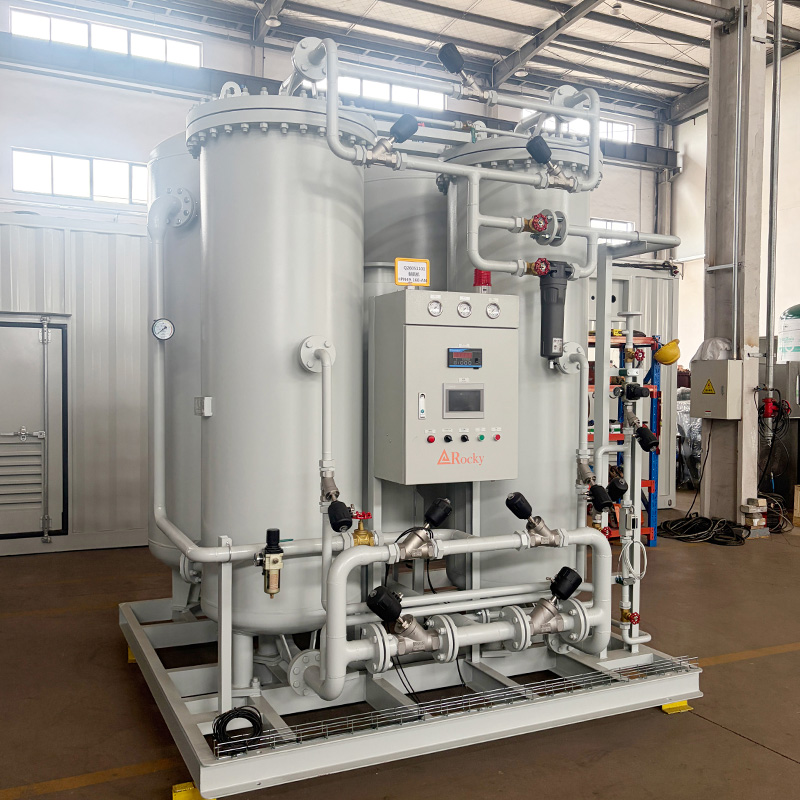
While specifically designed for laser cutting, this generator also excels in:
Laser Cutting – for mild steel, stainless steel, aluminium, and alloys. The 99.99% purity prevents oxidation, slag adhesion, and improves edge quality, especially critical for high‑power fibre lasers and thick‑plate cutting.
Metal Heat Treatment – provides a protective atmosphere for annealing, brazing, sintering, and quenching, preventing scaling and decarburisation.
Powder Metallurgy – sintering of metal powders under inert conditions.
Electronics & Semiconductor – reflow soldering and component protection where oxygen levels must be strictly controlled.
Chemical & Pharmaceutical – inert blanketing, reactor purging, and nitrogen padding.
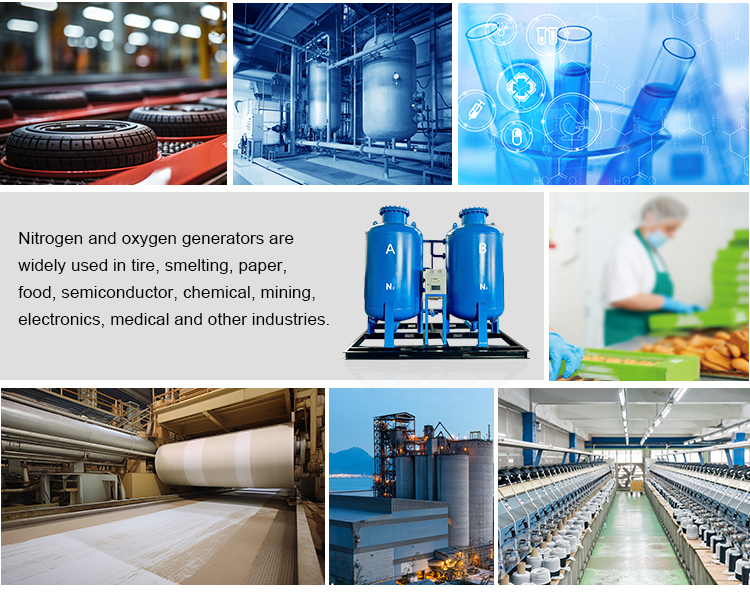
Reasons to Select Rocky
Proven PSA Expertise – built upon mature Pressure Swing Adsorption know‑how, guaranteeing stable and trustworthy performance.
Economically Viable – moderate equipment outlay coupled with low running costs, yielding a short payback period.
Flexible Customisation – bespoke configurations can be engineered to match specific purity and flow specifications.
Full‑Spectrum Support – comprehensive after‑sales service covering installation direction, start‑up assistance, and technical troubleshooting.
Prompt Delivery – streamlined supply chains and production capabilities ensure shipments meet agreed schedules.
Why Choose an On‑Site PSA N₂ Generator for Laser Cutting?
Consistent Gas Quality, Consistent Cut Quality
Laser cutting performance is highly sensitive to assist‑gas purity. With bottled N₂, purity can vary between batches; with liquid N₂, evaporative losses can concentrate impurities. A PSA generator delivers a stable, on‑spec 99.99% purity every second – ensuring repeatable cut speed, kerf width, and surface finish.
Eliminate Supply Chain Risks
Cylinder delivery is subject to traffic, weather, supplier schedules, and price volatility. An on‑site generator frees you from these dependencies – you produce your own nitrogen when you need it, where you need it, 24/7.
Safety & Convenience
High‑pressure cylinders (up to 200 bar) pose handling and storage risks. Liquid nitrogen requires cryogenic vessels and poses asphyxiation hazards in confined spaces. PSA generators operate at moderate pressures (typically 6‑10 bar) with far lower safety risks and no cryogenic burn hazards.
Environmental & Sustainability Benefits
On‑site generation consumes only electricity and ambient air. It eliminates the carbon footprint associated with transporting heavy cylinders or liquefied gas by road. For companies pursuing ESG goals, this is a tangible step toward greener operations.
Lower Total Cost of Ownership (TCO)
While the initial investment may be higher than renting cylinders, the payback period is typically 12‑24 months for a 160 Nm³/h system. After that, your nitrogen costs drop to just the electricity and minor maintenance – a predictable, fixed expense that protects your budget from market fluctuations.
Scalability & Future‑Proofing
As your laser cutting capacity grows, the PSA system can be expanded with additional modules or upgraded to higher flow, ensuring your nitrogen supply grows with your business.
Interested in a Cylinder Filling Station?
PSA Nitrogen Generator – Quick Selection Checklist
1. Flow rate: _____ Nm³/h (or SCFM) – specify peak demand & steady/fluctuating
2. Purity: _____ % – higher purity = larger unit; note tolerance (±0.x%)
3. Discharge pressure: _____ bar(g) or psig
4. Dew point: _____ °C (atmospheric or pressure dew point)
5.Feed compressed air: Pressure _____ bar(g); Temp _____ °C; Oil/water free (ISO 8573‑1 class)
6. Site conditions: Ambient temp min _____ / max _____ °C; Altitude _____ m
7. Power supply: _____ V / _____ Ph / _____ Hz
8. Operating pattern: Continuous 24/7 or intermittent/batch
9. Application: e.g., laser cutting, food, chemical – drives purity & safety choices.
10. Regulatory / safety: Local codes (ASME, CE, PED); ATEX required? Auto‑venting?


