
Views: 0 Author: Site Editor Publish Time: 2026-05-08 Origin: Site
Industrial gas systems often hit a performance wall when specialized applications demand extreme pressures. Upgrading an entire plant's infrastructure to meet a localized requirement drains resources. It also wastes massive amounts of energy. A Gas Booster compressor solves this specific problem.
We define this equipment as a secondary compression unit. It takes already pressurized gas from an existing supply line and amplifies it to reach target high pressures. This approach creates a strong business case for industrial facilities. It allows operators to achieve localized, extreme high-pressure outputs. You can reach up to 10,000 psi for component testing, for example. You achieve these metrics without the prohibitive capital expenditure of elevating the entire plant's baseline network pressure.
In this engineering guide, you will learn how secondary compression works mechanically. We will explore drive configurations, thermodynamic realities, and system sizing criteria. You will also discover exactly how to handle specialized media safely.
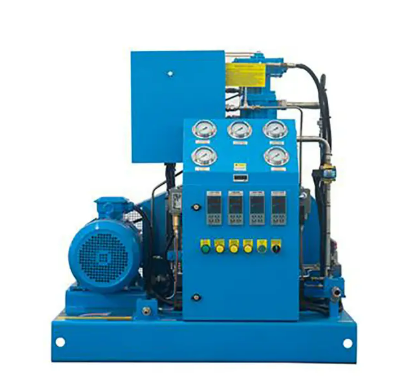
The 14.7 PSIA Baseline: Standard compressors draw from atmospheric pressure (0 psig); gas boosters require pre-pressurized inlet gas (typically 50–150 psig).
Targeted Efficiency: Secondary compression leverages the polytropic process equation, requiring significantly less power than primary compression.
Media-Specific Compliance: Handling reactive gases requires specialized units (e.g., an Oxygen Booster Compressor demands dedicated atmospheric venting and absolute oil-free operation).
Drive Scalability: Systems are classified by drive type (pneumatic, hydraulic, electric) dictating their portability, continuous duty rating, and automation readiness.
Engineers must establish an immediate disqualification metric before specifying equipment. We call this the 14.7 PSIA rule. If your gas source sits at atmospheric pressure (14.7 psia or 0 psig), you require a standard multi-stage compressor. A booster cannot pull gas from the atmosphere. If your inlet gas is already pressurized by an upstream system, a booster becomes the correct economic choice. It leverages existing pressure rather than starting from zero.
To understand how this works in practice, we must look at the standard closed-loop installation architecture. A successful system topology follows a strict sequence:
Upstream primary compressor: Supplies the baseline network pressure.
Inlet buffer tank: Stabilizes the incoming gas flow and prevents starvation.
Gas Booster Compressor: Amplifies the localized pressure.
High-pressure receiver tank: Stores the amplified gas for immediate use.
End-use application: Consumes the high-pressure gas.
This topology drives a highly favorable economic equation. Imagine a manufacturing facility running a 13-bar main air line. One specific machine needs 40 bar to operate. Boosting pressure locally at the point of use prevents immense thermal waste. It also saves the massive footprint required to upgrade plant-wide infrastructure. You only pay to compress the exact volume of gas you need at the higher pressure.
Secondary compression requires significantly less mechanical effort than primary compression. We explain this using the polytropic process equation. When you compress a gas, the work required depends heavily on the initial pressure. Starting with a higher initial inlet pressure (P1) drastically reduces the total mechanical work (W) needed to reach the final target pressure (P2). You avoid the highly inefficient lower stages of compression entirely.
However, operators face strict mechanical realities, primarily cylinder "dead space." A piston never perfectly touches the cylinder head at the end of its stroke. A tiny volume of high-pressure gas remains trapped in this dead space. Fresh gas only enters the cylinder when the piston retracts far enough for this trapped gas to expand. The internal pressure must drop below the supply pressure before the intake valve opens. This physical limitation dictates the maximum practical compression ratio for any single cylinder.
To manage these thermodynamic forces, systems rely on critical sub-components. We have summarized them below.
Component Name | Engineering Function | Operational Impact |
|---|---|---|
Drive Pump | Provides the primary motive force to move the gas piston. | Determines the maximum achievable flow rate and discharge pressure. |
Thermal Management | Utilizes intercooling (between stages) and aftercooling systems. | Prevents heat stress on seals and manages moisture condensation. |
Anti-Surge Protection | Regulates bypass valves during sudden flow drops. | Critical for preventing mechanical damage and vibration in high-volume uses. |
Selecting the right drive type balances capital expenditure against performance requirements. Engineers generally classify these systems into three distinct categories.
Pneumatic-Driven: These units use standard compressed air as the motive force. They remain highly portable and intrinsically safe. Since they lack electrical components, they are explosion-proof by design. However, pneumatic drives yield a lower maximum continuous flow compared to other options.
Hydraulic-Driven: Manufacturers design hydraulic units for continuous duty and extreme high-pressure applications. They push massive volumes of gas reliably. You will need a larger facility footprint to accommodate them. They also require external cooling systems to manage the heat generated by the hydraulic fluid.
Electric-Driven: These represent the highest capital expenditure. Electric motors offer precise RPM control and exceptional efficiency. They allow for easy SCADA integration. However, they require complex control panels and careful environmental monitoring.
Once you select a drive, you must choose a cylinder configuration to scale your amplification.
Single-stage, single-acting: Features unidirectional compression. It works best for moderate pressure boosts and intermittent testing.
Single-stage, double-acting: Uses alternating parallel cylinders. It compresses gas on both the forward and return strokes, delivering smoother continuous flow.
Two-stage, double-acting: Features series compression. Gas moves from a larger primary cylinder directly into a smaller secondary cylinder. This design achieves maximum pressure amplification.
Compressing specialized media introduces strict metallurgical and safety requirements. Inert and reactive gases behave differently under extreme pressure.
When engineering a Nitrogen Booster Compressor, you must focus entirely on maintaining high purity. Industrial manufacturing applications demand pristine gas. Laser cutting and PET blow molding often require nitrogen delivered at 350 to 450 psi. If contaminants enter the gas stream, they can ruin the final product. You must evaluate material compatibility carefully. Using stainless steel internals prevents rust and oxidation. This ensures the inert gas stream remains completely uncontaminated from the inlet to the point of use.
Handling oxygen demands even stricter protocols. An Oxygen Booster Compressor requires specialized compliance to mitigate severe safety risks. Oxygen under high pressure presents extreme combustion hazards. If pressurized oxygen contacts hydrocarbon lubricants, it can cause catastrophic explosions. Therefore, mandatory engineering features include a 100% oil-free design. Manufacturers utilize friction-mitigated seals and adhere to strict oxygen-clean assembly standards.
Furthermore, you must implement specific physical isolation. A safe oxygen system highlights the necessity of a physical "space vented to atmosphere" (often called a distance piece). This gap separates the gas compression section from the drive section. It ensures any drive-gas or lubricant leaks cannot cross over and contaminate the high-pressure oxygen stream.
Proper sizing prevents equipment failure and ensures process stability. Do not rely solely on horsepower ratings. Instead, use a structured evaluation method.
Initial inlet pressure vs. target discharge pressure: Determine the exact compression ratio required.
Required volumetric flow rate (SCFM): Calculate the actual volume your end-use application consumes per minute.
Gas composition: Identify if the media is inert, reactive, or flammable to dictate seal materials.
Duty cycle: Define whether the system will run intermittently or require 24/7 continuous operation.
Ambient temperature and humidity constraints: Assess the installation environment to size cooling systems properly.
Upstream filtration and drying requirements: Ensure incoming gas meets the booster's cleanliness specifications.
Material compatibility: Choose between carbon steel for dry inert gases or stainless steel for corrosive environments.
To contextualize these sizing rules, we can look at standard industrial benchmarks. Different sectors demand vastly different performance envelopes.
Industry Sector | Primary Application | Typical Target Pressure |
|---|---|---|
Oil & Gas / Pipeline | Subsea valve actuation and pressure testing | Up to 10,000 psi |
Manufacturing | PET bottle blow molding | Typically ~40 bar (580 psi) |
Energy Processing | Gas turbine purging and startup procedures | 400–600 psi |
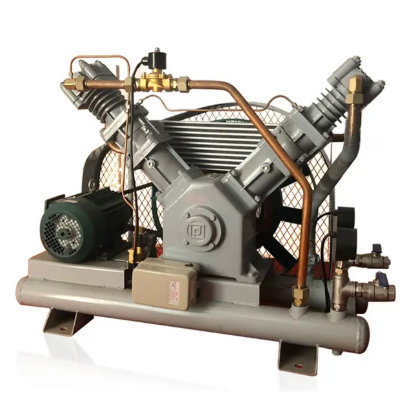
Modern industrial facilities move beyond manual regulation. Integrating automation ensures equipment longevity and process consistency. Connecting your system to advanced controls minimizes human error.
Automation & Control: Engineers now detail the integration of PID (Proportional-Integral-Derivative) control loops. These loops provide precise pressure and flow regulation, adjusting drive speeds instantly based on real-time downstream demand. You should also establish SCADA or DCS connectivity. Feeding operational data into a central dashboard allows maintenance teams to perform predictive maintenance. They can replace seals before a catastrophic leak occurs.
Operational Risks to Mitigate:
Starvation: You must monitor inlet pressures constantly. If the upstream supply drops below the booster's minimum inlet requirement, the cylinders will starve. This causes severe cavitation-like mechanical stress and overheats the seals.
Thermal Overload: Compressing gas generates heat. You risk underspecifying intercoolers in continuous-duty hydraulic units. If cooling fails, internal temperatures spike, destroying non-metallic dynamic seals instantly.
Seal Degradation: You need to plan maintenance intervals for dynamic seals proactively. While boosters generally require less maintenance than primary compressors due to fewer moving parts, seal wear remains unavoidable. Schedule downtime based on run-hours rather than waiting for performance drops.
Your final equipment selection rests on a straightforward decision matrix. You must evaluate your existing baseline line pressure, define the exact gas medium, and calculate the required duty cycle. Secondary compression provides immense value by amplifying pressure precisely where you need it.
As an actionable next step, advise your facility engineers to log current line pressures dynamically over a full operational shift. Map the target CFM at your exact point of use. Finally, consult a qualified system integrator to evaluate pneumatic versus hydraulic operational efficiency for your specific facility environment.
A: No. It requires a pre-pressurized inlet feed. Using it on atmospheric air will result in zero flow and potential equipment damage. The cylinders rely on initial pressure to open intake valves efficiently.
A: While the mechanical principles are similar, gas boosters require specialized seals, strict metallurgical compatibility, and unique venting architectures. These engineering differences allow them to handle inert, reactive, or corrosive media safely without leaks.
A: It operates on a significantly smaller pressure differential. By amplifying an already pressurized stream for localized use, it demands only a fraction of the horsepower required to compress gas from a zero-psig atmospheric baseline.


