
Views: 0 Author: Site Editor Publish Time: 2026-07-22 Origin: Site
Industrial compressed air systems hide a harsh financial reality: energy and maintenance account for up to 80% of a compressor's lifetime expense, completely dwarfing the initial purchase price. Facility managers operating in strict-purity industries face a constant dilemma. They must balance the non-negotiable need for zero oil contamination against the high operational costs and rapid mechanical wear typically associated with traditional dry oil-free systems. Relying solely on capital expenditure to make purchasing decisions often leads to inflated long-term budgets and unexpected downtime.
To make an accurate assessment, operators must adopt a comprehensive lifecycle cost methodology. This approach is the only reliable metric for evaluating an Oil-Free Water-Lubricated Screw Air Compressor. Moving beyond the initial price tag allows facilities to properly analyze energy efficiency gains, drastic maintenance reductions, and specific implementation realities that dictate true financial performance over a ten-year operational span.
Energy Dominates Lifecycle Costs: Water's superior heat capacity enables near-isothermal compression, significantly reducing the specific power consumption (kW/100 cfm) compared to dry screw alternatives.
Maintenance Economics: Eliminating oil removes the need for oil changes, air/oil separators, and expensive condensate disposal, drastically lowering routine OpEx.
Risk Mitigation as a Cost Saver: Guaranteed ISO 8573-1 Class 0 air eliminates the financial risks of product spoilage, recalls, and downstream filtration pressure drops.
Implementation Realities: The lifecycle model must account for site-specific requirements, including Reverse Osmosis (RO) water quality maintenance and ambient temperature controls to prevent freezing.
Evaluating the true financial footprint of a compressed air system requires breaking down a standard 10-year operational model. The variables include Capital Expenditure (CapEx), Energy Costs (OpEx), Maintenance and Consumables, Downtime and Risk, and End-of-Life Disposal. When mapped correctly, these factors reveal the actual cost of generating clean air. Facility leaders must track these metrics rigorously to avoid hidden financial traps. You cannot simply look at the invoice price and expect it to reflect reality.
Industry perception often suggests that oil-free technology is inherently less economical to own and operate than oil-injected technology. Deconstructing this assumption requires a strict test of your actual air purity needs. For facilities where trace oil can ruin production batches, the crossover point where oil-free becomes more economical happens almost immediately. Comparing an oil-free system directly to an oil-flooded unit on CapEx alone creates a false equivalence for sensitive applications. The risk of contamination renders the cheaper initial price of oil-flooded units irrelevant.
Establishing valid success criteria means benchmarking current system costs accurately. You must document baseline energy rates, specific duty cycles, and historical maintenance logs. Creating a valid comparison model requires looking at how much power is consumed per cubic foot of air delivered, alongside the exact labor hours spent managing oil and filters. We often see plants wasting thousands of dollars annually just managing waste oil disposal.
The physics of water lubrication fundamentally change the compression dynamic. Injecting water directly into the compression chamber seals the rotor clearances and absorbs heat instantly. This keeps operating temperatures extremely low, typically remaining under 50°C (122°F). Dry screw compressors, by contrast, generate intense heat that requires complex cooling stages and results in massive energy loss.
This near-isothermal process provides significant specific power advantages. It reduces the total energy required to compress the air, directly lowering the electrical footprint. When a water lubricated screw air compressor operates, the thermal efficiency translates directly into lower monthly utility bills, offering a massive advantage over the high temperatures and energy demands of dry oil-free compressors. The cooler the air remains during compression, the less work the motor has to do.
Matching air supply exactly to plant demand prevents wasted energy. Pairing water-lubricated technology with a Variable Speed Drive (VSD) eliminates costly unloaded running hours. The compressor simply speeds up or slows down based on real-time requirements, preventing the motor from drawing power when air is not needed. Fixed-speed units waste massive amounts of electricity venting excess pressure.
Calculating 5-year and 10-year energy projections requires mapping local kWh rates against fluctuating plant demand. Facilities with variable shifts see the fastest return on investment. The combination of isothermal compression and VSD technology creates a highly optimized system that minimizes electrical waste. You can map out your shift patterns and see exactly where a VSD will cut amp draw.
Energy reduction directly translates to measurable CO2 emissions reduction. Lowering the electrical draw helps enterprises meet strict environmental, social, and governance targets. Documented energy savings can help facilities qualify for green energy subsidies or avoid costly carbon tax penalties, adding another layer of financial justification to the lifecycle assessment. Less electricity pulled from the grid means a smaller carbon footprint for the entire plant.
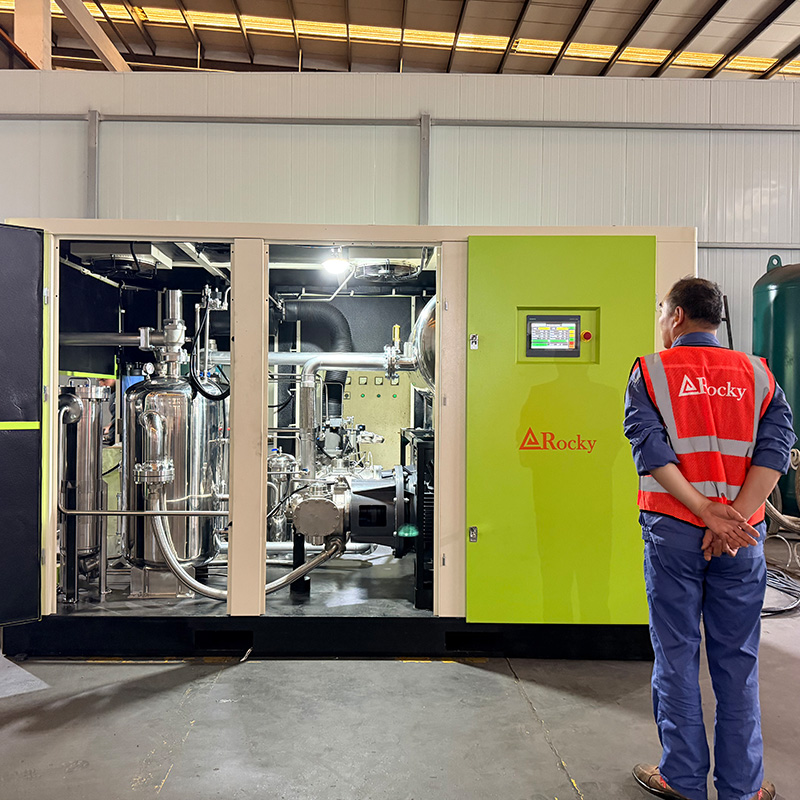 | 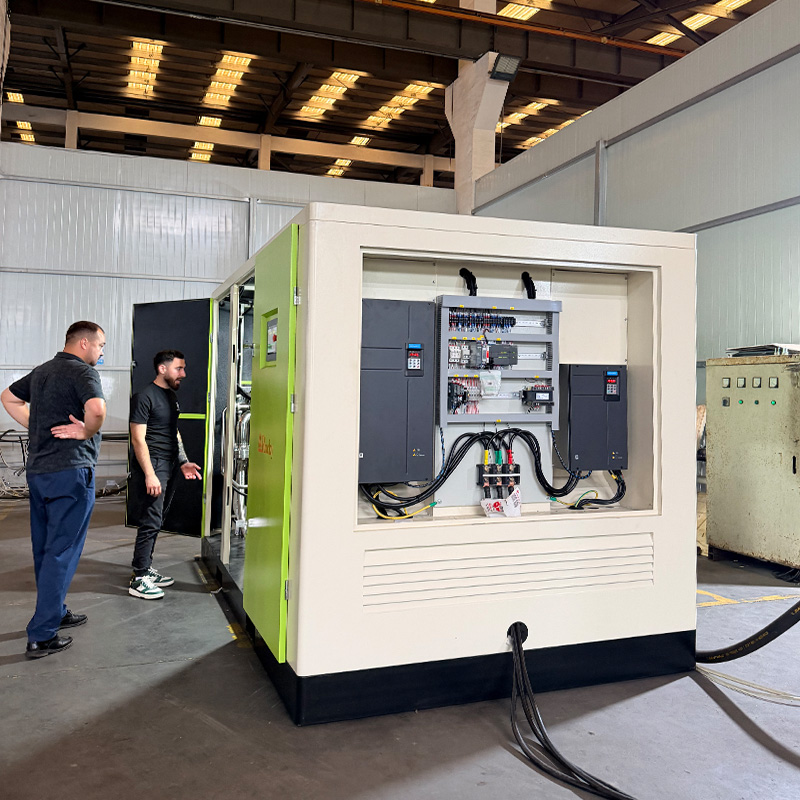 | 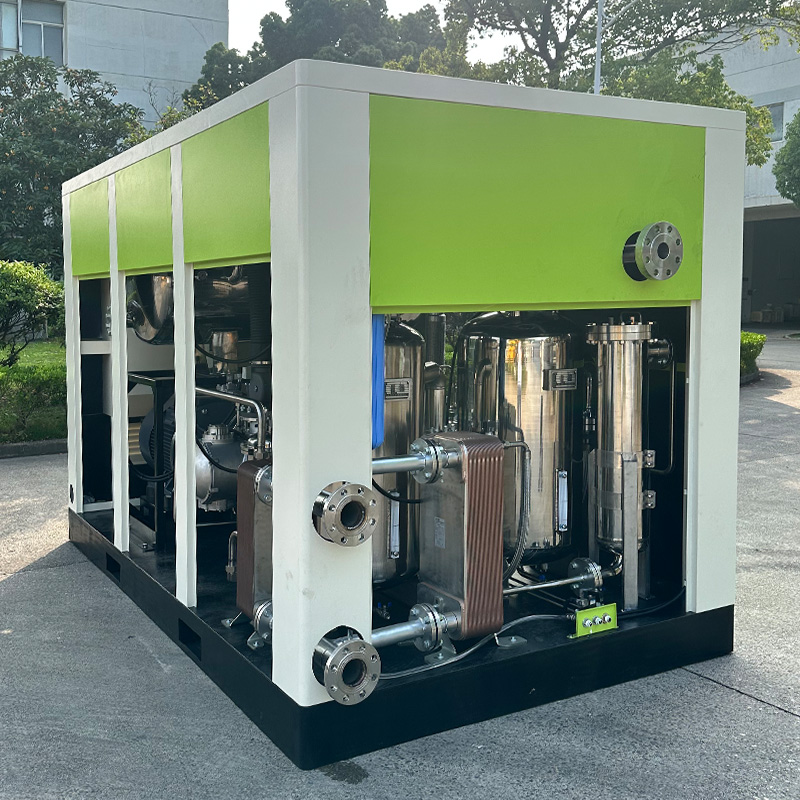 |
Removing oil from the compression process completely transforms the maintenance budget. Specific line items vanish entirely: synthetic compressor oil, heavy-duty oil filters, and complex air/oil separators are no longer required. Procurement teams no longer need to source, store, or manage these expensive consumables. You stop buying barrels of synthetic lubricant.
Labor and monitoring costs also plummet. Traditional systems demand heavy labor hours for monitoring oil levels, checking for leaks, and conducting routine oil analysis. A water-based system simplifies daily monitoring. Furthermore, managing condensate becomes highly cost-effective. Pure water condensate requires no expensive oil-water separators or specialized hazardous waste disposal protocols, ensuring easy environmental compliance. You can often pipe the condensate directly to the standard facility drain.
Mechanical wear and tear dictate the lifespan of any compressor. The lower operating temperatures and reduced thermal stress of a water-lubricated airend provide a stark contrast to the high-speed, high-heat friction found in dry screw Teflon-coated rotors. Heat degrades components rapidly, while water cooling preserves them. Thermal expansion is the enemy of tight rotor clearances.
Overhaul intervals extend significantly when thermal stress is removed. The expected lifecycle of the airend before a major rebuild is required stretches further into the future. Factoring this extended longevity into a 10-year operational model shows a distinct reduction in major capital repair costs. You get more running hours before needing to pull the airend for bearing replacement.
Defining true oil-free air requires strict adherence to international standards. A Class 0 oil free air compressor guarantees absolutely zero oil vapor, aerosol, or liquid in the air stream. This certification is the only acceptable standard for zero-tolerance environments where product purity is paramount. Anything less introduces unacceptable risk.
The financial impact of spoilage can devastate a facility. Hidden costs of oil carryover in traditional systems include scrapped production batches, severe brand damage, and heavy regulatory fines. Eliminating this risk entirely removes a massive financial liability from the balance sheet. One ruined batch of pharmaceuticals can cost more than the entire compressor room.
Industry-specific compliance mandates dictate equipment choices in sensitive sectors. Food and beverage processing, pharmaceutical manufacturing, and semiconductor fabrication cannot tolerate any contamination. A food grade oil free air compressor ensures compliance with health and safety regulations, protecting both the consumer and the manufacturer. You cannot risk oil vapor contacting food packaging.
Starting with 100% oil-free air also removes downstream filtration penalties. You eliminate the need for cascading inline coalescing filters. Removing these filters eliminates the associated pressure drops that force standard compressors to work harder and consume more energy just to push air through saturated media. Every 2 PSI of pressure drop costs you roughly 1% more in electrical power.
Comparing these two oil-free methods reveals distinct trade-offs. Dry oil-free systems generally carry a higher initial cost due to complex timing gears and specialized rotor coatings designed to withstand high heat. Water-lubricated systems feature a simpler mechanical design, utilizing water to seal and cool, which lowers manufacturing and maintenance complexity. The lack of timing gears simplifies the drive train.
Secondary facility benefits include significant noise and vibration reduction. Water-lubricated systems operate at lower RPMs because the water seal is highly efficient. This results in significantly lower decibel levels on the factory floor, improving worker safety and reducing the need for expensive soundproofing enclosures. You can often hold a normal conversation right next to the machine.
Oil-free scroll compressors offer a lighter and more compact footprint, making them popular for small laboratories or medical facilities. However, they face strict scalability and performance limits. They are restricted to lower-flow applications and cannot handle continuous, heavy-duty industrial demands. Water-lubricated screw compressors provide the heavy-duty capabilities and high CFM output required for large-scale manufacturing. Scrolls simply cannot keep up with a massive factory air demand.
The filtration fallacy traps many procurement teams. Buying a cheaper oil-flooded compressor and attempting to achieve high purity through heavy filtration is a flawed strategy. Filters degrade, and oil vapor eventually bypasses the media, leading to inevitable contamination. It is not a matter of if the filters will fail, but when.
The ongoing cost of frequent filter replacements destroys any initial savings. Furthermore, the permanent energy penalty of pushing air through multiple saturated filter banks increases electrical costs daily. The pressure drop across heavy filtration forces the compressor to generate higher pressure than the plant actually needs. You end up paying the utility company for the privilege of pushing air through dirty filters.
Technology | Initial Investment | Energy Efficiency | Maintenance Burden | Contamination Risk |
|---|---|---|---|---|
Oil-Flooded + Filters | Low | Poor (High Pressure Drop) | High (Oil & Filter Changes) | High |
Dry Oil-Free Screw | Very High | Moderate (High Heat) | Moderate (Complex Rebuilds) | Zero |
Water-Lubricated Screw | Moderate to High | Excellent (Isothermal) | Low (No Oil Management) | Zero |
The critical engineering reality of a water-lubricated system is its reliance on high-quality water. The system requires demineralized or Reverse Osmosis (RO) water to prevent internal scaling, mineral deposits, and corrosion on the rotors and housing. Standard tap water will destroy the internal components rapidly. You cannot just hook up a garden hose and expect the machine to survive.
Facilities must factor in water treatment costs. The capital expenditure and ongoing maintenance of an RO water purification system must be incorporated into the overall financial evaluation. While this adds a layer of complexity, the energy savings typically offset the cost of water treatment quickly. Maintaining the RO membrane is far cheaper than replacing an airend.
Water-lubricated systems face a distinct operational vulnerability: the freezing risk. Installing these units in unheated environments or regions experiencing sub-zero temperatures can lead to catastrophic internal damage if the water freezes and expands inside the airend. Ice will crack the cast housing.
Mitigation strategies require careful planning. Facilities must outline the costs of ambient temperature controls, heat tracing, or specialized winterization packages required for safe operation. Ensuring the compressor room remains climate-controlled is mandatory for this technology. You must keep the ambient temperature above freezing at all times.
Conduct a baseline compressed air energy audit to log your current kW/100 cfm usage and identify pressure drops across existing filtration.
Test your facility's incoming water supply to determine the exact Reverse Osmosis (RO) filtration requirements needed to support a water-lubricated system.
Request comprehensive 10-year lifecycle cost projections from authorized vendors, ensuring they include local electricity rates and exclude oil disposal fees.
Verify that your compressor room maintains a controlled ambient temperature above freezing year-round to protect the water-sealed airend.
A: With proper maintenance and strict adherence to water quality standards, the airend can easily exceed 40,000 to 60,000 operating hours before requiring a major overhaul. The lower operating temperatures significantly reduce mechanical wear compared to dry screw alternatives.
A: Water-lubricated systems are typically 10% to 15% more energy-efficient than dry screw compressors. The water absorbs heat instantly, creating a near-isothermal compression process that requires less electrical power to compress the same volume of air.
A: It does not require downstream oil coalescing filters because the air is 100% free of oil. However, particulate filters or desiccant dryers may still be necessary depending on the specific dew point and dust removal requirements of the facility.
A: Routine maintenance involves changing the water filter, replacing the air intake filter, inspecting the reverse osmosis water supply system, and checking the water quality sensors. There are no oil changes, oil filters, or air/oil separators to manage.
A: No. Standard tap water contains minerals, chlorine, and impurities that will cause severe scaling, corrosion, and premature failure of the airend. Only demineralized or Reverse Osmosis (RO) water must be used.
A: Automated packaging lines often have direct or indirect contact between compressed air and the food product or packaging material. A food-grade, oil-free compressor ensures compliance with FDA and strict safety regulations, eliminating the risk of oil contamination and product recalls.
A: Calculate the total current costs of energy, oil replacements, separator filters, downstream filtration pressure drops, and condensate disposal. Compare this against the higher initial purchase price of the water-lubricated unit minus its significantly lower energy and maintenance costs over a 10-year period.


