
Views: 0 Author: Site Editor Publish Time: 2026-05-06 Origin: Site
Industries like food processing, pharmaceuticals, and electronics demand absolute air purity. Even a microscopic drop of oil in the air supply can ruin entire production batches instantly. To achieve strict ISO 8573-1 Class 0 standards, facility managers typically choose between dry oil-free and water-lubricated technologies. While dry oil-free systems currently dominate the market, they introduce significant operational challenges. They frequently struggle under high operating temperatures. They also demand expensive, unavoidable maintenance to replace degrading rotor coatings over time. This guide objectively evaluates the advantages of a water-lubricated screw air compressor. We will unpack the exact physics behind its exceptional energy efficiency. You will also discover the practical implementation realities and potential risks. We aim to help you make a fully informed decision before upgrading your facility's air system.
Energy Efficiency via Isothermal Compression: Utilizing water's high specific heat capacity keeps exhaust temperatures below 45°C, saving 8–15% in energy consumption compared to dry oil-free alternatives.
Reduced Pressure Drop: Eliminating multi-stage oil filters reduces pipeline resistance. Lowering the pressure setting by just 0.15MPa can yield up to an 18% reduction in energy usage.
Lower Total Cost of Ownership (TCO) at Scale: Water-lubricated systems avoid the costly 80,000-hour Teflon/ceramic rotor re-coating required by dry screw compressors.
Strict Operating Constraints: The technology is highly sensitive to freezing environments and requires high-quality (deionized/RO) water treatment and stainless-steel internals to prevent scaling and corrosion.
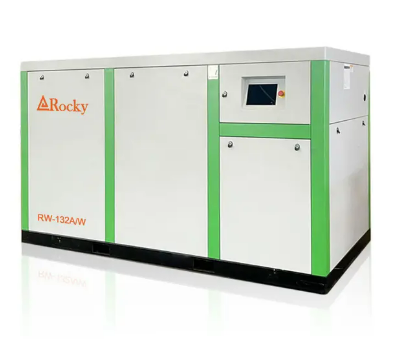
To understand the advantages of this technology, we must first examine how it operates. The term "water-lubricated" means purified water floods the main compression chamber. This water acts simultaneously as a lubricant, a sealant, and a primary coolant. This triple function fundamentally changes the internal physics of the machine.
We can contrast two thermodynamic concepts: adiabatic and isothermal compression. Dry oil-free compressors experience adiabatic compression. Because no liquid absorbs the internal heat, air molecules heat up rapidly as they compress. Temperatures at the exhaust valve often skyrocket past 200°C. This extreme heat forces metal internal components to expand. Engineers must leave larger physical gaps between dry rotors to prevent them from seizing. Larger gaps inevitably lead to internal air leaks, which drastically lowers machine efficiency.
Conversely, water lubrication achieves near "isothermal" compression. Purified water boasts a specific heat capacity roughly four to five times higher than synthetic oil. It absorbs the intense heat of compression immediately. The internal temperature remains remarkably constant. Exhaust temperatures rarely exceed 45°C. Because the system runs cool, rotors do not expand drastically. Engineers can design extremely tight internal clearances. These tight clearances prevent air leaks and push efficiency levels incredibly high.
You must also consider the direct impact on downstream equipment. Hot exhaust air requires massive cooling efforts before entering your facility network. Cooler exhaust air significantly reduces the drying load. Downstream refrigerated air dryers or desiccant dryers work much less. They consume far less electricity. You ultimately optimize energy use across your entire facility footprint.
Strict industries demand guaranteed ISO 8573-1 Class 0 certification. A single drop of oil can trigger catastrophic financial consequences. In pharmaceutical manufacturing, oil vapor compromises sterile cleanrooms. Entire batches of life-saving drugs face immediate rejection. In the food and beverage sector, oil alters delicate taste profiles and introduces severe health hazards.
A Water-Lubricated Screw Air Compressor eliminates this risk entirely at the source. The main compression chamber houses absolutely zero oil. You never worry about microscopic oil aerosols mixing with ambient factory dust. You never fear sludgy buildup ruining your pneumatic control valves. Sensitive laboratory instruments remain perfectly safe. Clean, pure air flows continuously to your critical processes.
Pressure drop acts as a hidden financial tax on your facility. Traditional oil-injected systems require multi-stage oil separators. They push compressed air through dense filter media to strip away the oil. Each filter creates physical resistance. The air loses valuable pressure as it forces its way through the network.
Water-lubricated setups bypass this problem completely. They lack oil separators. They require no heavy inline filtration grids. Pipeline resistance drops dramatically.
Consider the daily financial math. Every 0.1MPa increase in operating pressure consumes approximately 12% more electricity. Because network resistance stays inherently low, you can lower the master pressure setting. Facility managers routinely set a Water-Lubricated Screw Air Compressor 0.15MPa lower than comparable micro-oil machines. This simple adjustment yields up to an 18% reduction in daily energy usage. You achieve your required terminal pressure using far less power.
Industrial factory floors suffer from severe noise pollution. Compressors usually act as the primary culprits. Dry oil-free machines rely on complex timing gears. They maintain precise rotor clearances without physical contact. This mechanical precision generates high-pitched, whining mechanical sounds.
Water inherently changes the acoustic profile of the machine. It provides a dense physical cushioning effect inside the heavy casing. The fluid absorbs high-frequency sound waves. It dampens intense mechanical vibrations before they reach the factory floor. These units operate noticeably quieter. Measurements typically show a 10 to 15 dBA reduction compared to dry alternatives. A quieter compressor room directly reduces worker fatigue and improves overall workplace safety.
Routine maintenance consumables destroy operating budgets over time. You must constantly purchase, monitor, and replace components in traditional setups. Moving to water lubrication permanently removes several expensive recurring line items.
No synthetic oil replacements or top-offs.
No expensive oil-separator cores to buy.
No heavy inline oil filters to change.
No hazardous waste disposal fees for spent synthetic oil.
You bypass stringent environmental disposal regulations entirely. Your maintenance team reclaims countless hours previously spent on messy fluid changes. You only need to periodically replace simple water filters and monitor internal water quality.
Every industrial technology carries distinct limitations. You must understand these physical constraints before authorizing a purchase.
You cannot simply attach a municipal garden hose to these complex units. Ordinary tap water contains dissolved minerals like calcium and magnesium. Inside a highly pressurized chamber, these minerals react quickly. They precipitate out of the liquid. They form hard scale deposits directly on the metal rotors.
You must utilize deionized (DI) or reverse osmosis (RO) purified water. High-quality water treatment prevents internal scaling entirely. It also prohibits dangerous microbial growth. If you ignore strict water quality standards, internal clearances shrink rapidly. Friction increases. The compressor will inevitably fail. You must factor proper water purification infrastructure into your initial planning.
Water naturally oxidizes unprotected metal. Constant fluid exposure demands highly specialized metallurgy. Manufacturers must construct the air end using premium-grade stainless steel. They frequently incorporate heavy bronze or advanced ceramic polymers to resist rust.
Corrosion remains a massive vulnerability if manufacturers cut corners during production. Cheaper metals will rust quickly. Rust particles destroy internal precision seals. They eventually contaminate the clean air stream. You must rigorously verify the exact material specifications. Insist on comprehensive manufacturer warranties specifically covering internal corrosion.
Water freezes and expands. This simple physical reality limits your installation choices. Water-lubricated compressors possess extreme sensitivity to cold climates. You cannot install them outdoors. You cannot place them safely inside unheated warehouses during harsh winter months.
Facilities in cold regions face strict operational constraints. You must invest in climate-controlled compressor rooms. You must maintain ambient temperatures well above freezing at all times. Alternatively, you must install specialized, energy-intensive temperature control units. Some advanced systems utilize automated anti-freeze circulation during shutdown periods. These necessary workarounds increase complexity and upfront installation costs.
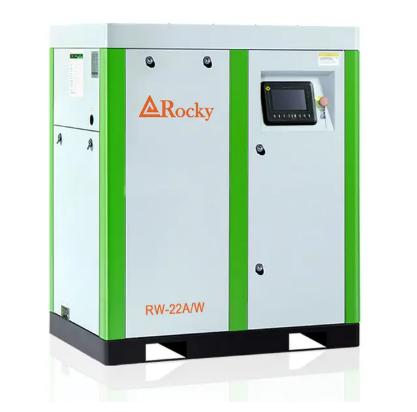
Financial planning requires looking far beyond the initial invoice. Procurement teams often fixate on the upfront purchase price. This narrow view ignores massive long-term financial implications. We strongly recommend a comprehensive ten-year value assessment evaluating CapEx, OpEx, and lifecycle maintenance.
Capital Expenditure focuses on day one. Dry oil-free compressors often boast a lower initial price point. High-end water-lubricated models carry a distinct financial premium. You pay extra for advanced stainless steel metallurgy. You pay for integrated reverse osmosis filtration systems. The upfront check will undoubtedly be larger.
Operating Expenditure focuses on daily electricity consumption. Energy usage completely dominates compressor finances. Electricity powers the heavy motor every single minute of operation. Here, water-lubricated models dominate the financial comparison. Their near-isothermal efficiency drastically cuts daily power draw. The elimination of filter pressure drops compounds these monetary savings. Over a five-year period, drastically reduced electricity bills usually offset the higher initial purchase price.
Dry screw technology hides a massive future expense. Engineers coat dry rotors using industrial Teflon or specialized ceramics. These thin coatings reduce extreme friction between tightly packed metal parts. However, physics dictates an inevitable outcome. Heat and friction degrade these chemical coatings over time. They eventually flake and wear extremely thin.
Most dry air ends require a complete overhaul around 80,000 running hours. You must completely remove the air end. You must ship it away for professional recoating or replace it entirely. This single maintenance event costs an absolute fortune. It disrupts facility operations severely.
Water-lubricated units neatly sidestep this financial trap. Purified water causes virtually zero friction wear. Rotors do not rely on degrading chemical coatings. Maintenance remains highly predictable. You change water filters. You monitor water purity. The ten-year financial outlook strongly favors water technology.
Evaluation Criteria | Dry Oil-Free Compressor | Water-Lubricated Compressor |
|---|---|---|
Cooling Method | Air-cooled or water-cooled intercoolers | Direct water injection into the chamber |
Typical Exhaust Temp | Often exceeds 200°C (Adiabatic) | Consistently below 45°C (Isothermal) |
Rotor Maintenance | Expensive recoating required (~80k hours) | No coating required; minimal friction wear |
Environmental Needs | Highly adaptable to extreme temperatures | Strictly requires environments above freezing |
Operational Noise | High-pitched, loud mechanical gearing | 10-15 dBA quieter due to water cushioning |
We created a rapid shortlisting logic for procurement engineers. Evaluate your facility realistically against these decision criteria before making your final choice.
You strictly require guaranteed ISO 8573-1 Class 0 air purity.
You prioritize long-term daily energy efficiency over the lowest upfront cost.
You maintain a fully climate-controlled compressor room year-round.
You desperately want to avoid massive end-of-life rotor overhaul expenses.
Food packaging plants, sensitive pharmaceutical labs, and large hospital facilities fit this profile perfectly.
Your industrial operation demands extremely high-pressure output exceeding 40 bar.
Your facility frequently experiences extreme environmental temperatures.
You completely lack the infrastructure necessary to produce purified RO water.
You operate in heavy chemical processing or remote, rugged energy sectors.
The primary advantage of this technology lies in a powerful combination. It guarantees absolute air purity while delivering unmatched electrical efficiency. Water fundamentally changes the thermodynamics of mechanical compression. It removes dangerous internal heat. It eliminates pressure-dropping oil filters. It substantially silences noisy mechanical operations on your factory floor.
We highly advise buyers to ignore the initial sticker price. Look deeply at the ten-year operational value. Calculate the immense energy savings generated by lower pressure settings. Factor in the money saved by bypassing the 80,000-hour rotor recoating trap. Always verify the manufacturer's metallurgy. Insist on strong warranties against internal component corrosion. Informed procurement decisions ensure decades of clean, reliable, and efficient air power.
A: Not if engineered correctly. Reputable manufacturers use premium stainless steel components, special polymer rotors, or advanced anti-corrosion alloys. They design the internal chamber specifically to withstand constant moisture. Always verify the metallurgy and review the warranty before purchasing to ensure long-term protection.
A: It strictly requires an ambient environment kept above freezing. If installed in cold climates, the facility must ensure the compressor room is constantly heated. Alternatively, the unit must be fitted with automated anti-freeze circulation systems. Without these precautions, internal water can freeze and cause severe mechanical damage.
A: Yes. The main compression chamber contains absolutely no oil. Any driving gearboxes present are physically isolated from the air end. This strict physical separation guarantees the output air strictly meets ISO 8573-1 Class 0 standards, making it completely safe for sensitive applications.


