
Views: 0 Author: Site Editor Publish Time: 2026-05-07 Origin: Site
Transitioning from delivered high-pressure cylinders or bulk liquid gas to on-site generation is a major capital decision. For facilities requiring reliable, high-purity gas, Pressure Swing Adsorption (PSA) technology offers unmatched control. However, you only unlock these benefits if you specify the system correctly.
Miscalculating flow rates, over-specifying purity, or ignoring infrastructure requirements causes serious operational headaches. These errors quickly lead to oversized systems, inflated energy bills, and premature equipment wear. You need a reliable framework to avoid these expensive engineering mistakes.
This guide provides an engineering-first framework to evaluate, size, and select a PSA gas generator. We will align your choice with specific operational demands and strict compliance realities. You will learn exactly how to match gas production capabilities to your facility's true requirements.
Purity dictates the price tag: Over-specifying purity (e.g., demanding 99.999% when 99.9% suffices) can unnecessarily increase energy consumption and compressor size by up to 40%.
The 98% Rule: PSA technology is generally the most cost-effective solution for applications requiring gas purities above 98%. Below this threshold, membrane systems may be more viable.
System over standalone: A generator is only as reliable as its feed air. Evaluating your compressed air infrastructure (ISO 8573-1 standards) is a mandatory step.
Look beyond CapEx: Total Cost of Ownership (TCO) is driven by energy efficiency (e.g., VFD integration), molecular sieve lifespan, and ongoing maintenance, typically yielding an ROI of 6 to 24 months.
Engineers often make a critical mistake during the initial design phase. They treat purity and flow rate as independent variables. In reality, these two metrics are tightly bound.
PSA systems operate on a strict inverse relationship between flow and purity. Feed air enters the generator and contacts the molecular sieve. The longer the air remains inside the adsorption tower, the higher the resulting gas purity. However, increasing this contact time inherently reduces the volume of gas the system can output per hour. You cannot maximize both simultaneously without significantly increasing the physical size of the equipment.
You must establish an acceptable threshold for oxygen or moisture residue based on your specific application. Different industrial processes demand vastly different purity levels. Food packaging typically requires 99% to 99.5% purity to prevent spoilage. In contrast, fiber laser cutting demands 99.995% or higher to prevent edge oxidation.
Over-specifying your requirements creates a massive financial penalty. Demonstrate how dropping a psa nitrogen gas generator requirement from 99.999% to 99.9% drastically reduces feed air demands and capital costs. A system designed for 99.999% often requires a compressor twice as large as one designed for 99.9%. This minor adjustment in specifications can reduce your energy consumption by up to 40%.
Do not size your system strictly on average consumption. Sizing for an average guarantees your system will fail during high-demand periods. Follow these numbered steps to calculate your true requirements:
Audit current usage: Calculate your total hourly and shift consumption using historical cylinder data or existing flow meters.
Identify the peak: Pinpoint the exact moments when multiple machines operate simultaneously.
Add a buffer: Factor in a 10% to 20% growth margin for future facility expansion.
You should also introduce receiver and buffer tanks into your design. These tanks store compressed gas and smooth out sudden peak demands. Proper tank sizing prevents you from buying an unnecessarily large core generator just to handle five-minute usage spikes.
Standard generators produce gas at roughly 100 to 125 PSI. Identify if your specific applications require higher pressures. If your process demands 300 PSI, you will need to integrate high-pressure boosters downstream from the standard generator output.
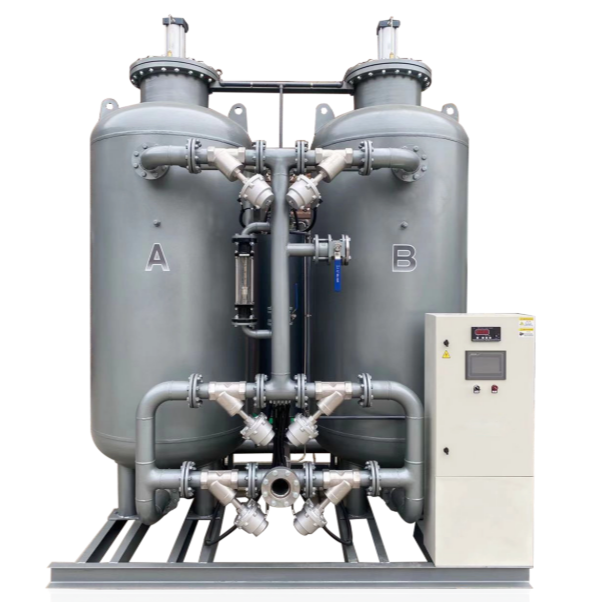
Selecting the wrong separation technology guarantees operational inefficiencies. You must evaluate the three primary gas generation methods based on your specific purity requirements and operating environment.
PSA is the ideal choice for high-purity demands ranging from 98% to 99.999%+. They operate using continuous switching between twin towers. These towers are filled with Carbon Molecular Sieve (CMS) for nitrogen separation or Zeolite for psa oxygen gas generators. As one tower absorbs unwanted molecules under high pressure, the other depressurizes to vent the exhaust. This continuous cycle provides an extremely stable, high-purity gas stream.
Membrane systems are best for purities under 98%. They push compressed air through thousands of hollow polymeric fibers. Faster-moving molecules escape through the fiber walls, while the target gas travels down the center. Membranes contain no moving electrical parts. This makes them highly mobile and perfect for harsh industrial environments, remote oil rigs, or marine applications.
Cryogenic separation cools air until it liquefies, then distills it based on boiling points. This method is reserved for massive-scale, facility-wide demands. It provides ultra-high purity and delivers both liquid and gas formats. However, it requires a massive physical footprint, high operational complexity, and specialized staff.
Review the table below to confirm your engineering choice. If your facility demands on-site, continuous, high-purity gas with a stable footprint, PSA is the definitive engineering choice.
Technology | Optimal Purity Range | Best Use Case | Key Limitation |
|---|---|---|---|
PSA Generator | 98% to 99.999%+ | Manufacturing, Labs, Laser Cutting | Higher initial cost, requires clean feed air |
Membrane | 90% to 98% | Harsh environments, mobile needs | Inefficient for ultra-high purity |
Cryogenic | 99.999%+ (High Volume) | Chemical plants, massive facilities | Complex operation, massive footprint |
A generator is not a standalone appliance. It functions as the heart of a larger interconnected system. It relies entirely on the quality of your facility's compressed air infrastructure.
A PSA generator cannot survive poor-quality compressed air. Discuss the necessity of meeting ISO 8573-1 standards for particulate, water, and oil aerosol limits. Specifically, most systems require ISO 8573-1 Class 1.4.1 or better. If compressor oil or liquid water breaches the generator, it will permanently coat the molecular sieve. This ruins the adsorption process and forces a catastrophic system failure.
To protect the generator, you must thoroughly evaluate your upstream components. Consider the following crucial elements:
Air Compressors: Assess your existing air compressors. Are they variable frequency drive (VFD) models? VFD compressors can dynamically match fluctuating gas generation demands, saving massive amounts of energy.
Air Dryers: You must install refrigerated or desiccant dryers. Removing moisture before it reaches the generator prevents the sieve from degrading.
Pre-filtration Systems: Install coalescing and particulate filters. These capture rogue oil aerosols and pipe scale.
Factor in the physical footprint of the entire skid. The complete system includes the compressor, air receiver, dryers, generator, and gas buffer tanks. Ensure your compressor room has adequate ventilation. High ambient temperatures degrade compressor efficiency and reduce the overall output capacity of the generator.
Evaluate the financial viability of on-site generation by shifting your focus away from the initial purchase price. You must analyze the long-term operational realities.
The upfront capital expenditure (CapEx) for a complete system often feels substantial. However, the operational expenditure (OpEx) is significantly lower than relying on continuous cylinder deliveries. You fix your gas costs to your local electricity rates, insulating your facility from vendor price hikes and delivery surcharges.
Modern systems save money via intelligent standby modes. When your downstream buffer tanks reach maximum capacity, the generator automatically pauses operation. It holds system pressure until demand resumes. This prevents the compressor from running needlessly during low-production shifts or weekends.
Maintenance is highly predictable. Outline routine costs such as annual filter replacements, oxygen analyzer calibrations, and routine pneumatic valve checks. Highlight a crucial fact: well-protected molecular sieves should last 10 to 15 years. Sieve replacement is usually a symptom of poor upstream filtration, not normal wear and tear.
Factor in environmental, health, and safety (EHS) benefits. On-site generation eliminates cylinder delivery fees and perpetual rental costs. More importantly, it mitigates severe facility risks. Removing high-pressure cylinder storage and cryogenic liquid handling appeals directly to EHS directors. It reduces worker injury risks associated with moving heavy tanks.
The following HTML chart illustrates the operational financial shift when moving from cylinders to an on-site system.
Cost Category | Cylinder Delivery Model | On-Site PSA System |
|---|---|---|
Gas Cost | High (recurring per cubic foot) | Low (tied directly to facility electricity) |
Delivery / Rental Fees | Continuous monthly expense | Eliminated completely |
Maintenance | Minimal (handled by vendor) | Predictable (annual filter & valve checks) |
Safety / Handling | High risk (heavy, high-pressure tanks) | Low risk (automated, stationary skid) |
Your facility will eventually grow. Your gas generation system must accommodate that growth without requiring a complete teardown.
Favor systems offering modular scalability. Advanced manufacturers design equipment allowing a "pay-as-you-grow" approach. Instead of buying a massively oversized unit today, you can purchase a base model. When production scales, you simply add expanding CMS banks to the existing skid rather than replacing the complete system.
Verify that your chosen vendor meets strict industry guidelines.
For labs and pharma: Verify instrument compatibility. Ensure the generator output meets LC-MS validation standards set by major analytical instrument manufacturers.
For manufacturing: Look for ISO 9001:2015 manufacturing standards and CE certifications to guarantee build quality and safety.
Shortlist vendors offering modern digital integrations. Look for IoT-enabled remote monitoring. These systems provide predictive maintenance alerts directly to your smartphone. They also offer real-time purity tracking, shutting down the process automatically if purity drops below your required threshold.
Before requesting manufacturer quotes, recommend initiating a professional gas audit. Log your current cylinder usage, identify pressure drops across your pipe network, and map your facility's airflow. Armed with this data, vendors can provide highly accurate system recommendations.
Selecting the right PSA gas generator requires balancing precise purity needs against flow rates and your available compressed air infrastructure. You must look past the generator itself and evaluate the entire upstream system.
Avoid the financial penalty of over-specifying your purity requirements. A properly sized system matched to your exact peak demands will naturally deliver a fast financial return, usually within two years. It permanently secures your facility's gas supply chain, eliminating reliance on third-party vendors.
Consult with an application engineer to conduct a comprehensive site gas audit. Use that data to map out a localized operational and financial projection for your specific facility.
A: A molecular sieve will typically last 10 to 15 years under optimal conditions. The lifespan depends entirely on the quality of your feed air. If your upstream filters and dryers strictly eliminate oil aerosols and liquid moisture, the sieve experiences almost zero degradation.
A: Yes, but only if your compressor has sufficient excess capacity and meets strict air quality standards. The feed air must comply with ISO 8573-1 requirements for particulate, water, and oil removal. You will likely need to add dedicated dryers and coalescing filters.
A: Most industrial facilities achieve a full return on investment within 6 to 24 months. The exact timeline depends on your current cylinder delivery costs, your local electricity rates, and your daily volume of gas consumption.
A: You handle sudden spikes by strategically sizing your downstream receiver tanks. Large buffer tanks store compressed gas and release it instantly during high-demand bursts. This prevents you from over-spending on a massive core generator designed only for brief peak moments.


