
Views: 0 Author: Site Editor Publish Time: 2026-05-14 Origin: Site
Many industrial facilities operate under a remarkably costly assumption. They believe industrial gas must be rented, delivered, and stored on site. You do not have to accept this dependency. Onsite generation offers a major strategic shift. You can move from unpredictable supply chain vulnerabilities to complete operational control. Historically, plant managers relied entirely on vulnerable cryogenic liquid or high-pressure cylinder deliveries. Today, transitioning to independent onsite production simply makes better business sense.
Decision-makers must focus on realistic solutions. Plant managers and financial officers prioritize long-term industrial growth and operational sovereignty. In this guide, you will learn how replacing external gas deliveries with internal production stabilizes budgets. We will explore the hidden risks and financial leaks of traditional gas supply. You will discover the concrete, measurable benefits of onsite gas generation. We will cover technical trade-offs, high-impact application scenarios, and key evaluation metrics. By the end, you will understand exactly how to secure gas independence for your facility.
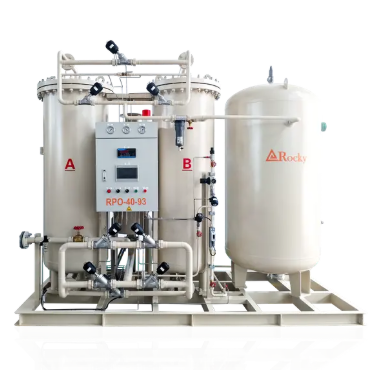
Cost Predictability: Replacing recurring delivery and rental fees with a fixed utility cost can yield up to 50% long-term savings.
Risk Mitigation: Eliminates the physical hazards of cryogenic storage (-196°C) and high-pressure cylinders (up to 300 bar).
Purity Optimization: Allows facilities to generate exact required purities — e.g., 90–95% for oxygen or up to 99.999% for nitrogen — eliminating the premium paid for unnecessary ultra-high purity delivered gas
Strategic Fit: Best suited for facilities with predictable, consistent demand; less ideal for highly volatile, unpredictable volume spikes.
Relying on delivered bulk liquid or high-pressure cylinders introduces unseen financial drains. Bulk liquid tanks constantly experience an issue known as venting waste. Cryogenic liquid naturally warms up over time. As it absorbs ambient heat, the liquid converts back into a gaseous state. This creates excess pressure inside the storage vessel. To prevent ruptures, the tank vents this excess gas into the atmosphere. You lose product you already bought. During weekend shutdowns or production lulls, this boil-off loss destroys your budget.
Next, consider the "bottom-of-the-tank" phenomenon. Facilities pay full price for pressurized cylinders. However, residual gas always remains at the bottom of the tank. You cannot extract this remaining gas because the internal pressure drops too low for industrial applications. You effectively return unused product while paying for a full volume. Compounding logistical costs also drain capital. Long-term vendor contracts often lock buyers into unfavorable terms. Unpredictable delivery surcharges increase during fuel shortages. Cylinder rental fees pile up month after month. These structural inefficiencies make external delivery a continuous financial leak.
External delivery creates a massive single point of failure. Bad weather can easily block local delivery routes. Trucking strikes halt regional shipments completely. When external factors disrupt your gas supply, production lines immediately stop. This external vulnerability exposes your facility to catastrophic downtime. You cannot afford to let third-party logistics dictate your production schedule.
Furthermore, handling gas deliveries poses severe physical risks. Workers regularly move heavy, unyielding cylinders. These cylinders hold compressed gas at pressures reaching up to 300 bar (4,350 psi). Moving them through tight spaces, such as sterile cleanrooms or crowded factory floors, increases accident risks. Dropping a high-pressure cylinder can cause catastrophic valve failures. Cryogenic liquid offloading presents even greater dangers. Liquid nitrogen sits at -196°C. Spills or leaks during transfer cause instant, severe frostbite. These extreme temperatures require specialized personal protective equipment and rigid safety protocols. Eliminating these daily deliveries creates a dramatically safer working environment for your team.
Onsite generation transforms gas from a variable third-party commodity into a fixed, predictable utility. You stop paying outside suppliers for transportation and rental fees. Instead, you produce the gas internally on your own terms. This strategic shift completely removes volatile fuel surcharges from your operating budget. Capital recovery occurs swiftly. By eliminating delivery logistics, your initial equipment investment pays for itself rapidly.
Facilities then redirect these saved funds into long-term industrial growth. You gain complete sovereignty over your operational expenses. The days of auditing fluctuating invoices and debating delivery schedules end immediately. Financial officers appreciate this predictability. When you control the means of production, forecasting next year's budget becomes highly accurate. You shield your operations from global inflation and regional supply shocks.
The liquid gas market operates on a rigid, inefficient model. Suppliers produce ultra-high purity gas at centralized plants. They charge premium, non-negotiable rates for this standard. But why pay for 99.999% purity when your specific manufacturing process only requires 95%? This fundamental mismatch forces industrial facilities to drastically overpay for unnecessary refinement.
Onsite systems permanently solve this problem. Engineers can dial in the precise purity required. You match the generation output directly to your specific application needs. This optimization guarantees you never pay for unnecessary purification steps. For example, implementing a psa nitrogen gas generator allows precise calibration for your unique assembly line. You take control of the technical specifications instead of accepting a generic market standard.
Corporate sustainability goals demand actionable, measurable changes. Onsite gas production directly aligns with modern Environmental, Social, and Governance (ESG) mandates. First, it slashes your Scope 3 carbon emissions. You actively remove heavy diesel delivery trucks from your supply chain. Eliminating these weekly deliveries instantly shrinks your carbon footprint. You no longer share responsibility for the exhaust emissions of your vendors.
Second, modern onsite systems consume less energy than traditional alternatives. They feature a low "air factor". This means they use compressed air highly efficiently to extract the desired gas. Compare this to mass market suppliers. Large vendors rely on cryogenic fractional distillation. That legacy process consumes immense amounts of electricity to cool air into a liquid state. Onsite generators provide an automated, low-emission alternative. They help your corporate sustainability initiatives succeed while simultaneously lowering costs.
Pressure Swing Adsorption relies on a proven physical process. A standard system uses a robust twin-tower setup. One tower actively adsorbs impurities under high pressure while the other desorbs, venting those impurities safely away. For nitrogen production, Carbon Molecular Sieve (CMS) technology handles the crucial separation.The CMS features microscopic pores typically in the range of 0.3 to 0.5 nanometers (e.g., 0.3–0.4 nm for standard CMS), which allow selective separation based on molecular size and diffusion rates. These tiny pores trap smaller oxygen molecules while letting larger nitrogen molecules pass through.
To establish proper context, we should contrast this with membrane technology. Membrane systems push compressed air through bundles of permeable polymer fibers. They win on general simplicity and boast a smaller physical footprint. However, PSA systems win decisively on ultra-high purity. They also boast notably lower air consumption rates. This lower air factor means the feed compressor works less aggressively. Therefore, PSA systems remain highly efficient for demanding, continuous industrial workloads.
A fundamental rule of physics governs onsite gas production. Purity and airflow operate in a strict inverse relationship. If you demand ultra-high purity, such as 99.999%, you must intentionally reduce the flow rate. The molecular sieve simply needs more time to capture every single oxygen molecule. Pushing air through the system too fast lowers the final gas purity. The molecules rush past the sieve before adsorption occurs.
Buyers must carefully audit their actual requirements. Measure your peak flow needs directly against your minimum acceptable purity thresholds. Do not guess these critical numbers. Guessing often leads to costly mistakes. You might over-size your feed air compressors, wasting electricity. Conversely, you might under-size the system, starving your production lines during peak hours. A properly sized system perfectly balances output velocity with strict purity limits.
Diverse industries rely heavily on precise internal gas production. Nitrogen serves as the ultimate inert blanket for sensitive operations.
Food & Beverage: Modified Atmosphere Packaging (MAP) relies on consistent nitrogen flow. It aggressively displaces oxygen inside food packaging. This prevents oxidation, stalls microbial growth, and extends product shelf life significantly.
Electronics & Semiconductor: Manufacturers require highly inert environments for wave soldering. Nitrogen prevents delicate solder joint oxidation during circuit board assembly. This ensures high component reliability and drastically fewer defective products.
Oil & Gas: Safety relies entirely on proper gas management. Facilities use nitrogen for blanketing large storage tanks to meet strict explosion-proof requirements. They also use it for deep pipeline purging and complex Enhanced Oil Recovery (EOR) processes to maintain reservoir pressure.
Industrial oxygen serves an equally vital role across heavy manufacturing and municipal sectors.
Water & Wastewater Treatment: Municipal and industrial facilities heavily utilize psa oxygen gas generators for intense biological treatment processes. High-concentration oxygen aids in rigorous bacterial odor control. It also supports efficient ozone generation for advanced water purification.
Metal Fabrication & Smelting: Oxygen rapidly accelerates industrial heating. It drastically enhances combustion temperatures inside furnaces. It also improves precision cutting efficiency in heavy steel manufacturing settings, leaving cleaner edges.
Mining & Glass Blowing: These rugged sectors operate massive, high-temperature kilns. They need continuous oxygen flow to maintain intense, localized heat. Onsite systems provide reliable support without the heavy burden of remote liquid oxygen deliveries over unpaved roads.
Evaluating the best gas supply strategy requires an objective look at your facility's operational profile. Not every site benefits equally from onsite generation. Use the comparison framework below to determine the optimal fit for your business.
Evaluation Criteria | Choose a PSA System If: | Stick with Liquid Delivery If: |
|---|---|---|
Demand Profile | Gas usage is predictable, steady, and runs consistently long-term. | You experience massive, unpredictable, and highly infrequent volume spikes. |
Budget Structure | Capital expenditure (CapEx) is available to secure immediate OpEx reductions. | You lack upfront CapEx and must rely entirely on variable monthly spending. |
Location Logistics | Your facility is remote (e.g., offshore platforms) where truck logistics are difficult. | You are located very near major gas suppliers with guaranteed rapid delivery. |
Facility Space | You have adequate footprint and existing infrastructure for an air compressor system. | Your facility has absolutely zero available footprint for new utility equipment. |
This framework clarifies the strategic path forward. Remote operations and consistent manufacturing lines gain massive, immediate advantages from onsite production. However, highly erratic operations might still justify legacy delivery models.
Plant managers must establish realistic expectations before installing new utility infrastructure. These robust generators typically boast a functional lifespan of 10 to 20 years. However, they only achieve this impressive longevity through disciplined, proactive maintenance. You cannot simply install them and ignore them.
The most critical maintenance factor is inlet air quality. You must aggressively protect the sensitive molecular sieve inside the generator columns. Moisture and vaporized compressor oil will permanently ruin the adsorbent material. Preventing this requires properly sized feed air compressors and highly robust refrigerated or desiccant dryers. Additionally, maintenance teams must perform frequent, scheduled filter replacements. Clean, dry air guarantees optimal continuous performance. Ignoring these basic upkeep rules rapidly leads to costly material degradation and unplanned factory downtime.
The industrial manufacturing sector is rapidly shifting away from renting its essential gases. Forward-thinking facilities now view gas as a critical utility they can own, control, and optimize. By eliminating constant truck deliveries, you remove severe logistical risks and regain absolute budget stability. You also align your daily production workflows with strong, measurable corporate sustainability goals.
Before requesting vendor quotes or writing purchase orders, take a tangible next step. Conduct a thorough internal "Gas Usage Audit" across your facility. Follow these straightforward actions to build your baseline data:
Measure the exact minimum purity actually required for your specific industrial applications.
Record your facility's peak flow rates strictly during maximum production hours.
Calculate your total current annual delivery, rental, and estimated venting waste costs.
Arming yourself with this verified operational data ensures success. You can confidently specify the perfect onsite generation system to drive your long-term growth.
A: Expect an operational lifespan of 10 to 20 years. However, this longevity depends entirely on disciplined preventative maintenance. You must prioritize frequent filter changes and strict air dryer upkeep. Protecting the internal carbon molecular sieve from moisture and oil ensures maximum durability and consistent gas purity over decades.
A: Yes. Modern onsite systems feature modular scalability. Facilities can easily add capacity as production demands grow. You can integrate additional generation units without overhauling your entire setup. They also integrate smoothly with advanced hybrid or renewable energy systems for sustainable, long-term operational expansion.
A: The initial transition requires basic infrastructure updates. You must install necessary piping and properly integrate the feed air compressors. Once installed, however, the daily process is incredibly smooth. Modern systems utilize highly automated control panels. They require minimal daily operator training to run effectively and safely.


