
Views: 0 Author: Site Editor Publish Time: 2026-05-15 Origin: Site
Procuring high-pressure pneumatic equipment is never a simple hardware purchase. It is a critical infrastructure decision. This single choice directly determines your plant's energy overhead and product scrap rate. Industrial stretch-blow molding demands highly specific pneumatic conditions. You typically need 25 to 40 bar (up to 580 psi) to expand pre-heated parisons. Standard industrial units cannot sustain these intense pressures without catastrophic failure.
Consequently, evaluating these robust systems requires looking far past initial capital expenditure. You must focus intensely on securing 100% duty cycle reliability. Furthermore, you need to guarantee ISO-certified air purity to protect consumer health. In this guide, we will explore the precise mechanics behind blow molding pneumatics. You will learn how to compare competing compressor architectures. Finally, we will provide an actionable framework to properly size and select the optimal setup for your facility.
S1 100% Duty Cycle is Mandatory: PET blow molding requires continuous, uninterrupted high-pressure air; anything less results in pressure drops and defective batches.
ISO Class 0 Oil-Free is the Baseline: Protecting consumer health and avoiding flavor contamination (e.g., acetaldehyde issues) requires strict oil-free air and exact dew-point control.
System Architecture Dictates TCO: Choosing between a standalone high-pressure piston air compressor, a booster network, or a centrifugal unit depends entirely on the facility's existing low-pressure grid and projected production volume.
Infrastructure Costs are Hidden: High-pressure stainless steel piping and large receiver tanks for pulsation dampening often make up a significant portion of the installation cost.
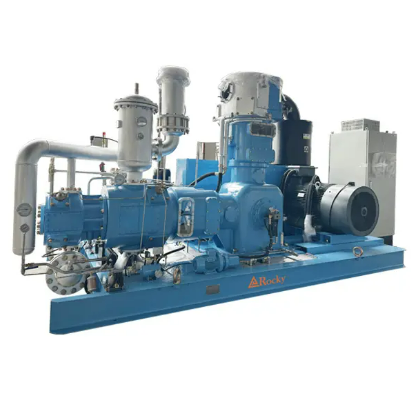
Stretch-blow molding forms the foundation of modern plastic bottle manufacturing. First, machines pre-heat PET parisons. Next, high-pressure air forcefully expands these parisons inside precision molds. The exact force and timing of this air directly determine the final product quality. A dedicated PET Bottle Air Compressor provides this necessary force. If the pressure fluctuates, bottle wall thickness becomes uneven. Clarity degrades. Structural integrity ultimately fails.
Compressed air does not just blow bottles. It powers vital auxiliary plant functions. You need it for rapid mold cooling. It drives robotic material handling systems. Pneumatic actuators rely entirely on steady air flow. Furthermore, air conveying systems transport lightweight empty bottles down the line. A centralized high-pressure system must often support these secondary tasks through specialized pressure step-down valves.
Business risk in bottle manufacturing is exceptionally high. Your tolerance for pneumatic failure should be zero. Even a momentary pressure drop causes instant quality defects. Exceeding a 15 psi fluctuation during the blow phase ruins the batch. An unexpected air supply interruption generates massive amounts of rejected product. This leads directly to significant profit loss and missed production quotas.
Industry-standard architectures vary widely. You must match the technology to your specific facility type. Below, we break down the three primary categories.
The heavy-duty Piston Air Compressor represents the gold standard for large PET plants. These are typically water-cooled, oil-free reciprocating models. They offer exceptional continuous performance. You can expect a lifespan of 20 to 30 years under ideal conditions. However, they require higher initial capital expenditure. They also demand strict adherence to maintenance intervals.
Booster units take an entirely different approach. They capture existing low-pressure plant air (usually 7 to 10 bar). They then amplify this air up to ten times for the blow molding machine. This decentralized approach brings massive cost-efficiency. By placing a booster near the blow molder, you eliminate a major expense. You no longer need extensive, highly expensive high-pressure stainless steel piping routed across your facility.
Centrifugal compressors work best for massive base-load operations. They feature a surprisingly compact footprint. They deliver enormous volumes of high-pressure air. However, they carry a distinct disadvantage. They suffer from poor energy efficiency when running at partial loads. If your production demand fluctuates, a VSD-equipped piston machine will perform much better.
Technology Type | Ideal Application | Lifespan Expectancy | Key Advantage | Primary Drawback |
|---|---|---|---|---|
Piston (3/4-Stage) | Large, continuous operations | 20–30 years | Extreme durability and high pressure | Higher initial capital cost |
Booster (Point-of-Use) | Facilities with existing low-pressure grids | 10–15 years | Eliminates expensive stainless piping | Relies on primary air network capacity |
Centrifugal | Massive base-load plants | 25+ years | Compact footprint for high volume | Poor partial-load energy efficiency |
You must evaluate equipment based on continuous operation standards. Specifically, your equipment must carry an S1 continuous duty rating. PET applications run constantly. Intermittent-rated machines cannot survive this environment. They will quickly overheat, degrade, and fail. Always check the motor and pump nameplates for the S1 designation.
Air purity directly impacts consumer safety and product quality. You must secure ISO 8573-1 Class 0 or Class 1 certification for oil content – ideally Class 0 for completely oil-free air. Minute oil vapors can create acetaldehyde off-flavors in beverage containers.
Critical note on moisture: A standard refrigerated dryer (pressure dew point 2~10°C) is not sufficient for PET blow molding. Residual moisture at this level will cause hydrolytic degradation of PET, resulting in hazy bottles and reduced strength. You must install a desiccant adsorption dryer to achieve a pressure dew point of -20°C to -40°C (-4°F to -40°F). Only this low dew point prevents moisture from chemically compromising the PET material.
Physics gives four-stage compression a distinct advantage over three-stage compression. Spreading the workload across four stages lowers the compression ratio per cylinder. Lower ratios yield significantly better cooling. This directly improves energy efficiency. Furthermore, Variable Speed Drive (VSD) technology is crucial. It matches motor output to fluctuating blow-molder demand. Implementing VSD can effortlessly cut your energy waste by up to 20%.
Do not ignore the hidden costs of starting your equipment. Large high-pressure machines pull massive inrush currents. Standard starts create power spikes. Utility companies penalize these spikes heavily. Modern solutions eliminate this problem. Look for sequenced starting systems. Some manufacturers offer virtual shaft algorithms. These technologies synchronize dual-machine starts to prevent electrical grid overload.
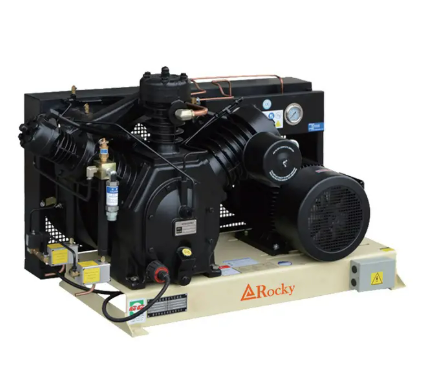
Reciprocating piston machines generate low-frequency, high-impact pulsations. They essentially hammer the downstream air. You cannot route this directly into delicate blow molding equipment. A properly sized receiver tank is mandatory. You must install it immediately downstream. It absorbs aggressive shocks. It prevents catastrophic piping fatigue and stabilizes your line pressure.
PET compressors require intensive upkeep. They are often the most maintenance-dense assets in a facility. You must prepare for this reality. Strict service intervals dictate operational health. Typically, these land at 2,000, 4,000, and 6,000 hours. Valve replacements happen frequently. You must factor these parts and labor hours into your operational budget.
Best Practice: Keep spare valve kits on-site. Shipping delays for specialized high-pressure valves can halt production for days.
Common Mistake: Pushing a 4,000-hour service to 5,000 hours. This almost always results in premature ring wear and pressure loss.
Downtime costs are unacceptable in high-volume plastics. Facilities requiring 98% or higher uptime must plan for redundancy. You should factor a 100% backup system into your initial capital planning. Operating without a redundant system invites catastrophic risk. If your primary unit goes down for a routine 6,000-hour service, your entire plant stops making money.
Industry trends lean heavily toward pressure reduction. Many plants previously ran at 600 psi. Through careful mold optimization, they now drop blowing pressure down by 50 psi. This seemingly small reduction achieves compounding energy savings. Your air system works less. Your electricity bills drop dramatically. Always ask your tooling engineer if pressure reduction is possible.
Sizing your equipment requires exact math. Guesswork leads to massive inefficiencies. Follow these actionable steps to determine your exact needs.
Determine Real Air Consumption: You need three baseline variables. Multiply your bottles per hour by the volume per bottle. Then, multiply that by your blowing pressure. You must also factor in bottle complexity. Simple water bottles demand lower pressure. Complex pharmaceutical shapes or highly pressurized carbonated beverage bottles require much higher forces.
Assess Facility Readiness: Audit your current infrastructure thoroughly. Check your existing low-pressure air availability. Measure your cooling water capacity. Evaluate your ambient temperature controls. Finally, measure your physical footprint. You must leave adequate clearance for heavy forklifts and overhead maintenance gantries.
Calculate Project Horizon: Match the equipment to your long-term business plan. Are you fulfilling a short-term 5-year contract? A lower-cost, air-cooled unit might make sense. Are you building a 20-year mega-facility? You necessitate a high-efficiency, water-cooled continuous system.
A specialized bottle air system is a highly complex asset. Energy consumption and meticulous maintenance dictate its true operational viability. You cannot judge these machines by their sticker price alone. Your plant's productivity relies entirely on uninterrupted pneumatic force.
We advise you to strictly prioritize ISO Class 0 purity and S1 continuous duty ratings. Before you buy, audit your plant's existing low-pressure network. This determines if you need a standalone high-pressure system or a decentralized booster configuration. Proper sizing prevents costly production bottlenecks.
Take action today. Conduct a comprehensive energy and flow audit of your current blow molding lines. Contact a certified pneumatic engineer. Have them calculate your exact CFM and pressure requirements before you finalize any procurement.
A: A receiver tank is critical for absorbing aggressive low-frequency pulsations. Reciprocating equipment generates heavy mechanical shocks during operation. The tank buffers these impacts. It stabilizes the air pressure perfectly before it reaches the delicate blow molder, preventing pipe fatigue and inconsistent bottle molding.
A: No. Standard industrial compressors peak around 10 to 14 bar. Stretch-blow molding requires massive forces, typically between 25 and 40 bar (360 to 580 psi). Standard units also lack the S1 continuous duty cycle required for uninterrupted, 24/7 plastics production. They will quickly overheat and fail.
A: Generally, yes. Spreading the workload across four distinct stages reduces the compression ratio per cylinder. This basic physics principle lowers operating temperatures. It significantly extends valve life. Most importantly, it drastically improves overall energy efficiency compared to three-stage models.
A: You should implement Variable Speed Drives (VSD) to match motor output with actual demand. Additionally, recover intermediate low-pressure air for secondary plant functions. Finally, optimize your bottle mold designs. Dropping your blowing pressure by just 50 psi can easily yield a 5% overall energy savings.


