
Views: 0 Author: Site Editor Publish Time: 2026-07-15 Origin: Site
Achieving absolute air purity without sacrificing thermal and volumetric efficiency remains a persistent engineering challenge in critical manufacturing. Facility managers constantly face a difficult operational dilemma on the plant floor. Traditional oil-injected compressors introduce severe risks of downstream contamination, jeopardizing sensitive end products and pneumatic instrumentation. Conversely, standard dry oil-free compressors operate at extremely high temperatures, suffer from accelerated component wear, and exhibit significantly higher specific energy consumption. Bridging this gap requires a fundamental shift in compression mechanics.
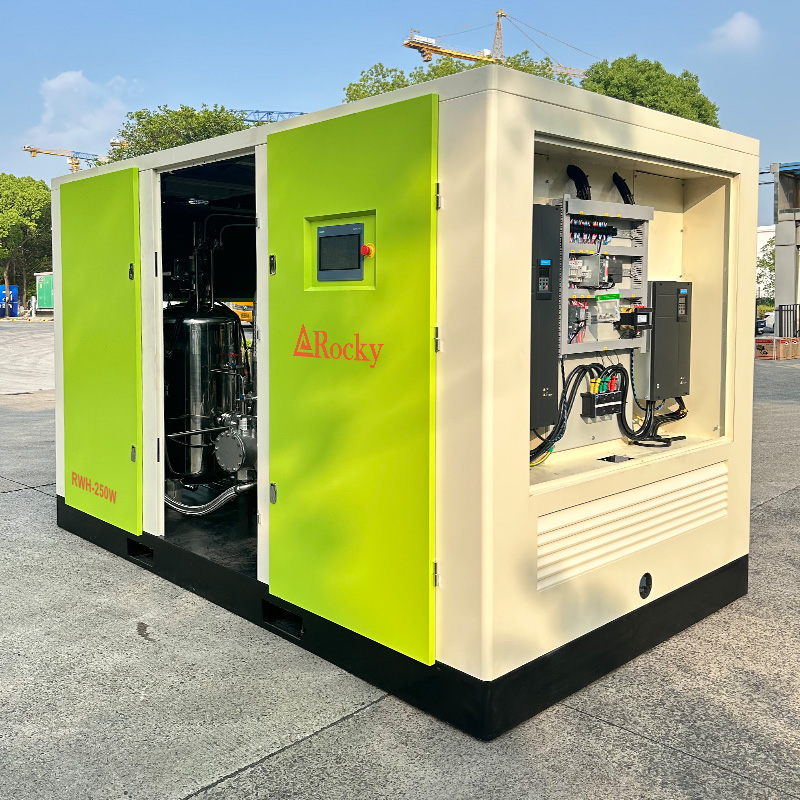
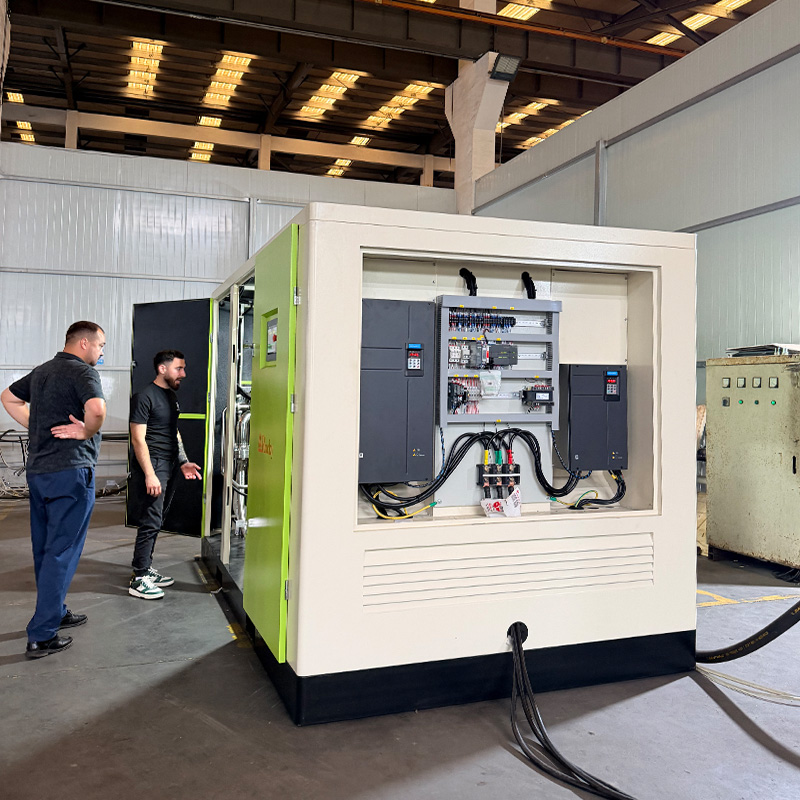
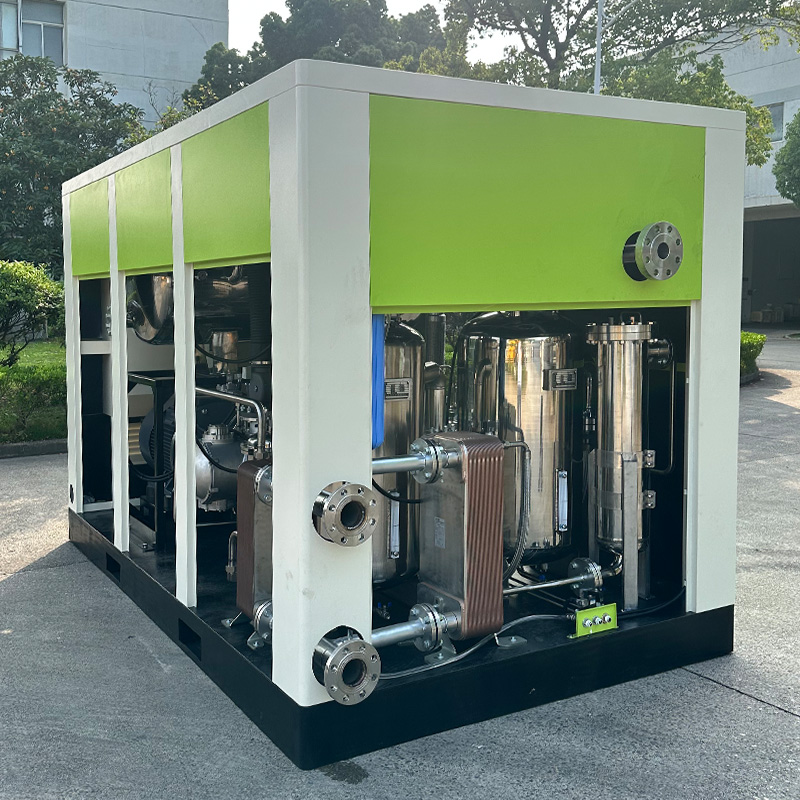
Water lubrication serves as the optimal engineering bridge between purity and performance. An Oil-Free Water-Lubricated Screw Air Compressor utilizes purified water as a coolant, sealant, and lubricant. This approach eliminates the severe thermal inefficiencies inherent to dry compression methods while guaranteeing zero oil carryover into the air supply. By leveraging the natural thermodynamic properties of water, facilities achieve superior system efficiency, stabilize operating temperatures, and maintain strict compliance with industry purity standards.
Near-Isothermal Compression: Water’s high specific heat capacity absorbs compression heat instantly, drastically reducing the energy required to compress air compared to dry oil-free models.
Enhanced Volumetric Efficiency: Water creates an effective hydrodynamic seal between the screw rotors and housing, minimizing internal air leakage (slippage) and maximizing volumetric output.
Guaranteed Air Purity: Eliminates the risk of hydrocarbon contamination, ensuring compliance with stringent ISO 8573-1 Class 0 standards for sensitive applications.
Compressing air generates massive amounts of heat. As atmospheric air is forced into a decreasing volume within the air end, the kinetic energy of the gas molecules increases rapidly, resulting in a temperature spike. In thermodynamics, hot air expands and resists compression. This means the electric motor must expend exponentially more mechanical energy to push the expanding air to the target discharge pressure. Managing this heat dictates overall compressor efficiency.
Water possesses exceptional thermal conductivity and a specific heat capacity far superior to traditional synthetic lubricants or ambient air. When water is injected directly into the compression chamber, it absorbs the heat of compression instantaneously. This continuous cooling mechanism lowers discharge temperatures to near-ambient levels, typically remaining below 50°C (122°F). This phenomenon closely replicates near-isothermal compression, the theoretical ideal where temperature remains constant during volume reduction. By keeping the air cool, the compressor requires significantly less electrical power to achieve the desired pressure output.
Volumetric efficiency dictates how effectively a compressor delivers its theoretical maximum air volume. A major challenge in rotary screw designs is "slippage," where high-pressure air escapes backward through the microscopic clearances between the intermeshing rotors and the casing. In dry-screw systems, slippage severely compromises performance, forcing the rotors to spin at incredibly high speeds—often exceeding 10,000 RPM—just to outpace the air leakage.
A water lubricated screw air compressor solves this by utilizing a thin, continuous film of injected water to actively seal these micro-gaps. The hydrodynamic seal prevents high-pressure air from bleeding back to the intake side. Unlike dry systems that rely on tight mechanical tolerances and degradable Teflon coatings, the fluid seal adapts dynamically to the rotor profiles. This maximizes volumetric output at much lower rotational speeds, reducing mechanical strain on the bearings and improving overall system efficiency.
Mechanical friction destroys rotating equipment. Without a lubricating medium, metal-to-metal contact would seize the compressor air end in seconds. Water provides excellent boundary and hydrodynamic lubrication, reducing mechanical friction between the moving parts without introducing any hydrocarbons into the system.
To make water a viable lubricant without causing rapid oxidation or rust, manufacturers employ advanced materials engineering. The rotors are typically constructed from specialized polymer-ceramic composites or highly alloyed stainless steel, while the housings utilize bronze or marine-grade stainless steel. These corrosion-resistant materials allow the water to function purely as a friction-reducing agent, ensuring smooth operation and extending the mechanical longevity of the air end far beyond traditional dry-coated equivalents.
Traditional oil-injected rotary screw compressors dominate general industrial applications because oil performs a highly efficient triple role: it cools the air, seals the rotor gaps, and lubricates the bearings. This threefold functionality makes oil-flooded designs highly efficient and durable, but they carry the inherent risk of downstream oil contamination, which is unacceptable in sensitive manufacturing environments.
An oil free water lubricated air compressor perfectly mimics this exact multi-functionality. Water steps in to cool, seal, and lubricate with equal or greater efficacy than synthetic oils. Operators gain all the thermodynamic and mechanical efficiency benefits of an oil-flooded design while completely eliminating the risk of hydrocarbon carryover. It provides the ultimate synthesis of high performance and absolute air purity.
 |  |  |
Because dry oil-free compressors lack an internal cooling fluid, they cannot achieve standard plant pressures (like 100 PSI) in a single stage without exceeding safe temperature limits. They require a complex, two-stage compression process. Air is compressed partially in the first stage, routed through a massive intercooler to remove the extreme heat, and then compressed to the final pressure in the second stage. This setup is mechanically complex, requires more moving parts, and is inherently less efficient.
Water-lubricated systems achieve highly efficient single-stage compression. The continuous water injection manages the heat so effectively that a second stage and intercooler are entirely unnecessary. When evaluating specific energy consumption, the superior cooling of the water-injected system translates directly into substantial energy savings. The motor simply does not have to work as hard to overcome the thermal expansion of the air.
Feature | Dry Oil-Free Screw Compressor | Water-Lubricated Screw Compressor |
|---|---|---|
Compression Stages | Two-stage (requires intercooler) | Single-stage |
Operating Temperature | Very High (often >150°C) | Low (typically <50°C) |
Rotor Sealing | Degradable Teflon/Polymer Coating | Continuous Hydrodynamic Water Film |
Rotational Speed | High (10,000+ RPM) | Low (approx. 3,000 RPM) |
Efficiency Over Time | Declines as rotor coatings wear off | Remains stable due to constant fluid seal |
Dry-screw rotors rely on specialized Teflon or ultra-hard coatings to minimize the clearances between the rotors. Over time, the extreme thermal stresses and high-speed rotation cause these coatings to degrade. The degradation process follows a predictable, destructive path:
Thermal expansion and contraction weaken the bond between the coating and the base metal.
High-speed particulate ingestion causes micro-abrasions on the rotor surface.
The coating begins to flake off, widening the internal clearances between the intermeshing rotors.
Slippage increases, forcing the compressor to run longer and hotter to maintain plant pressure.
Efficiency steadily declines until the air end requires a catastrophic, highly expensive rebuild.
Water-lubricated air ends maintain a stable, flat efficiency curve throughout their operational life. The sealing medium—water—is continuously replenished. There are no degradable coatings to wear out. The internal clearances remain sealed by the fluid film year after year. This prevents clearance degradation and replaces the catastrophic repair cycles of dry screws with predictable, manageable maintenance intervals.
Oil-injected systems require complex downstream filtration, including oil separators, coalescing filters, and minimum pressure valves, to strip the oil back out of the air. These components create significant internal pressure drops. Every time the air pushes through a dense filter element, pressure is lost. To deliver 100 PSI to the factory floor, the compressor might have to generate 115 PSI internally, wasting massive amounts of energy.
Water-lubricated systems eliminate the need for these heavy downstream oil filtration components. The simplified discharge path drastically reduces internal pressure drops. The compressor does not have to over-pressurize at the discharge point to meet the end-use pressure demand, eliminating a major source of parasitic energy loss and reducing the load on the main drive motor.
In traditional oil-lubricated systems, atmospheric moisture is a severe hazard. As the compressor draws in humid air and compresses it, water condenses inside the oil reservoir. This water degrades the oil's lubricity, causes internal rust, and leads to premature bearing failure. Oil manufacturers spend heavily on chemical additives to improve water separability, but it remains a constant battle for maintenance teams.
In stark contrast, water-lubricated systems treat atmospheric moisture as an asset. The condensate generated during compression is naturally separated and integrated directly into the closed-loop lubrication system. The compressor essentially generates its own makeup water from the ambient air, completely neutralizing the threat of water contamination and turning a traditional engineering problem into a self-sustaining operational advantage.
When air purity is non-negotiable, facilities rely on the ISO 8573-1 standard. Class 0 is the most stringent classification available, guaranteeing that zero added oil is introduced during the compression process. It is important to note that Class 0 does not mean zero ambient hydrocarbons from the intake air, but it strictly mandates that the compressor itself adds absolutely no oil to the airstream.
Many facilities attempt to cut corners by using oil-injected compressors equipped with heavy downstream coalescing filters, marketing the setup as "technically oil-free." This is a dangerous gamble. These setups are prone to single-point filtration failures. Furthermore, as temperatures rise, oil vaporizes and easily passes through standard coalescing media. A true Class 0 oil free air compressor provides structural certainty, eliminating the oil hazard at the source rather than attempting to filter it out after the fact.
The food and beverage sector operates under intense regulatory scrutiny. Compressed air is frequently used to mix ingredients, transport powders, aerate liquids, and blow out packaging before filling. In these direct-contact applications, even microscopic traces of compressor oil can alter the taste, odor, and safety of the consumable product.
Deploying a food grade oil free air compressor is a fundamental requirement for risk avoidance. Water-lubricated systems eliminate the risk of product spoilage caused by hydrocarbon carryover. By removing oil from the equation, plant managers protect their operations from catastrophic product recalls, severe brand damage, and regulatory penalties from health agencies.
Cleanroom environments demand absolute environmental control. In active pharmaceutical ingredient (API) manufacturing, medical device assembly, and semiconductor fabrication, compressed air powers highly sensitive pneumatic instrumentation and comes into direct contact with high-value products. A single drop of oil can ruin an entire batch of microchips or contaminate a pharmaceutical run.
Water-lubricated compressors serve as a critical risk-mitigation tool in these high-stakes environments. They ensure cleanroom integrity and protect millions of dollars in production inventory. By guaranteeing zero-risk operation regarding oil contamination, these systems allow high-tech manufacturers to focus on production yields rather than monitoring complex filtration arrays and worrying about vapor carryover.
Upgrading to a water-lubricated system requires evaluating the balance between initial capital investment and long-term operational savings. Because water causes standard carbon steel to rust immediately, these compressors must be built using premium, non-corrosive materials. The air end housings are cast from bronze or stainless steel, and the rotors utilize advanced polymer-ceramics. This drives up the initial CapEx compared to standard oil-injected machines.
However, the OpEx recovery is rapid. Facilities typically see a 10 to 15 percent reduction in power draw due to the near-isothermal compression efficiency. Furthermore, maintenance budgets shrink drastically. There is no expensive synthetic rotary screw oil to purchase, no heavy oil separators to replace, and no hazardous waste disposal fees for used oil. The operational savings quickly offset the higher initial purchase price.
Operating a water-injected system requires strict adherence to fluid quality standards. Facility managers cannot simply pipe raw municipal tap water into the compressor. Standard tap water contains dissolved minerals, calcium, and magnesium. Under the heat and pressure of compression, these minerals will rapidly precipitate out of the water, causing severe scaling on the precision rotor clearances and internal housings.
To maintain internal component integrity and maximize system uptime, proper water treatment solutions are mandatory. Facilities must utilize Reverse Osmosis (RO) water purification systems to strip the minerals before injection. Most modern water-lubricated compressors feature integrated auto-replenishment systems that continuously monitor water quality, flush out concentrated impurities, and introduce fresh RO water, ensuring the internal mechanisms remain pristine and scale-free.
Industrial facilities face increasing pressure to reduce their environmental footprint. Traditional compressors require hundreds of gallons of synthetic oil over their lifespan. This oil must be routinely drained, transported, and disposed of as hazardous waste. Furthermore, the condensate generated by oil-flooded compressors is a toxic oil-water emulsion that requires expensive chemical separation before it can be legally discharged into municipal drains.
Water-lubricated systems align perfectly with modern sustainability targets. They completely eliminate the use of synthetic hydrocarbons. The condensate produced by the machine is simply pure water, which can be safely discharged directly into the drain without any chemical treatment or environmental risk. This dramatically reduces the facility's hazardous waste output and simplifies environmental compliance.
Audit your current compressed air usage to determine if downstream filtration pressure drops are artificially inflating your energy demands.
Implement a dedicated Reverse Osmosis (RO) water treatment system prior to installing water-lubricated equipment to prevent internal mineral scaling.
Evaluate your facility's compliance requirements to ensure your current system meets true ISO 8573-1 Class 0 standards without relying on easily compromised coalescing filters.
Transition away from dry-screw technology if your facility struggles with frequent air-end rebuilds and degrading volumetric efficiency over time.
A: Water absorbs the heat of compression instantly, keeping internal temperatures low. This near-isothermal process requires significantly less energy to compress the air. Additionally, the water creates a tight hydrodynamic seal between the rotors, preventing air slippage and maximizing volumetric output.
A: No. Standard tap water contains dissolved minerals like calcium. Under pressure and heat, these minerals cause severe scaling on the rotors and internal components. You must use purified Reverse Osmosis (RO) water to ensure smooth operation and prevent mechanical damage.
A: The injected water cools and seals the rotors, then travels with the compressed air to a separation vessel. The system separates the liquid water from the air, cools it, filters it, and recirculates it back into the compression chamber in a continuous closed loop.
A: Dry compressors run at extreme temperatures, require complex two-stage setups, and rely on Teflon coatings that wear out over time, reducing efficiency. Water-lubricated systems run cooler, use a simpler single-stage design, and maintain consistent efficiency because the fluid seal never degrades.
A: No. Because there is absolutely no oil inside the compression chamber, there is no need for downstream coalescing oil filters or separators. This eliminates internal pressure drops and significantly reduces ongoing filter replacement maintenance.
A: Yes. Unlike oil-injected compressors that produce a toxic oil-water emulsion requiring specialized separation and disposal, the condensate from a water-lubricated system is pure water. It can be safely and legally discharged directly into standard municipal drains.


