
Views: 0 Author: Site Editor Publish Time: 2026-05-18 Origin: Site
Reliance on delivered bulk liquid or cylinder oxygen introduces severe supply chain volatility. You often face hidden delivery fees and strict safety compliance overhead. On-site generation solves this by physically separating oxygen from ambient air. It shifts oxygen from an outsourced, expensive consumable into a predictable, self-generated utility. We aim to demystify the specific mechanical and molecular processes of a PSA Gas Generator. Procurement and facility engineers need clear data to evaluate if this technology aligns with their site demands. You will discover exactly how these systems function. We explore the core components, air quality constraints, and practical return on investment calculations. Understanding these metrics helps you match equipment capabilities to your specific flow, purity, and infrastructure requirements. By mastering these operational principles, you can confidently transition away from outdated delivery models and secure your own continuous gas supply.
Process Reality: PSA gas generators do not “manufacture” oxygen; they physically extract it from ambient air (21% O₂, 78% N₂) using alternating pressure cycles.
Molecular Filtration: Zeolite molecular sieves (typically 13X or lithium exchanged X type) selectively trap nitrogen molecules due to their higher quadrupole moment, allowing oxygen to pass through at practical purities of 90–95%.
Cost Predictability: By eliminating cylinder rentals, ADR (hazardous goods) handling, and delivery fees, facilities typically achieve ROI in 6 to 24 months for continuous high volume operations (12 to 36 months for typical industrial applications).
Implementation Constraint: System longevity relies heavily on feed air quality; compressors must supply air strictly meeting ISO 8573-1:2010 Class 1.2.1 or equivalent standards (particles ≤ 0.1 mg/m³; pressure dew point ≤ -40°C; residual oil ≤ 0.01 mg/m³) to protect the zeolite.
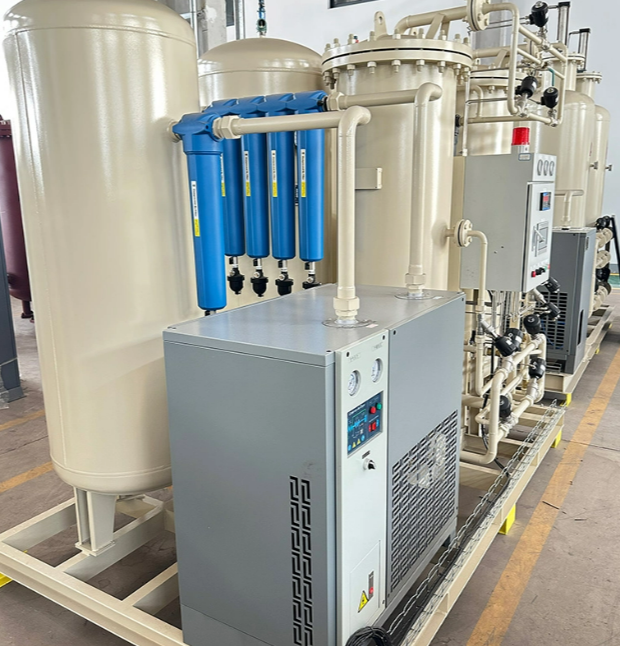
Understanding the nomenclature clarifies the utility requirements and the mechanical footprint of the equipment. Facility engineers must grasp these three terms to plan their compressed air supply properly. We break down the acronym to reveal how the process functions at a high level.
The process requires a steady feed of compressed air. Systems typically operate between 4 to 8 Bar(g). Higher pressure drives the molecular separation inside the vessel. Without adequate pressure, the separation medium cannot effectively hold onto the unwanted gas molecules. You must ensure your air compressor delivers a stable flow at these specific pressure ratings.
This term refers to the continuous, alternating dynamic between two separate containment vessels. While one vessel actively purifies the gas, the other regenerates. They swing back and forth in a synchronized rhythm. Automated valves control this rapid switching. This continuous swing guarantees you receive an uninterrupted flow of oxygen downstream.
You must distinguish adsorption from absorption. Absorption acts like a sponge soaking up water into its entire volume. Adsorption represents a surface-level phenomenon. Gas molecules temporarily adhere to the highly porous surface of a separation medium. Once the pressure drops, the molecules release from the surface. This reversible trait allows the system to run continuously for years.
Evaluating the internal mechanics helps engineers understand the continuous nature of the output. It also clarifies the lifespan of the core materials. We can divide the standard cycle into three distinct phases.
The Adsorption Phase (Tower A): Compressed air enters a vessel filled with Zeolite molecular sieves. These synthetic crystals feature extremely uniform pore sizes of roughly 10 angstroms. Nitrogen possesses a higher quadrupole moment than oxygen. This physical trait causes nitrogen to bond strongly to the zeolite under high pressure. Oxygen, along with trace argon, bypasses the sieve entirely. The system directs this purified oxygen into a dedicated buffer tank.
The Pressure Equalization Step: The active tower eventually reaches its nitrogen capacity. Before swapping roles, automated valves open to equalize pressure between the two towers. This recovers pressurized void gas. It transfers trapped energy to the resting tower. This simple step significantly reduces the energy required by the air compressor. Engineers monitor this to calculate the Air Factor, which defines the system's energy efficiency.
The Desorption Phase (Tower B): The fully saturated tower must regenerate. The system rapidly releases the internal pressure. This sudden depressurization breaks the molecular bond between the nitrogen and the zeolite. The system vents the trapped nitrogen directly into the atmosphere as exhaust. A small amount of produced oxygen then enters the vessel as "purge gas." This sweep cleans the vessel completely and prepares it for the next active cycle.
Preventing specification errors requires distinguishing PSA from similar technologies. Buying the wrong system leads to artificial bottlenecks or inflated energy bills. You must evaluate these alternatives based on your unique site conditions.
Membrane systems use selective permeation rates through hollow fibers. PSA uses surface adsorption. Membrane units prove highly durable in harsh, hot environments. They tolerate vibration well. However, membrane technology caps out at lower purities. PSA achieves higher purity, reaching up to 95% for oxygen. PSA also provides a better Air Factor. It consumes less electricity per cubic meter of produced gas.
Terminology often confuses buyers in this industry. "Concentrators" typically denote low-flow, plug-and-play units. Hospitals and households use them for clinical therapy. They lack heavy-duty components. Industrial "Generators" represent robust systems engineered for continuous manufacturing demands. They handle massive volume requirements and feature industrial-grade piping and programmable logic controllers (PLCs).
Exceedingly high-flow applications demand different energy economics. VPSA utilizes low-pressure blowers and vacuum pumps instead of high-pressure air compressors. This vacuum assist lowers overall power consumption at large industrial scales. As a general guideline, VPSA becomes more cost-effective than PSA for oxygen capacities above approximately 30 Nm³/h. Typical VPSA applications include steel manufacturing (blast furnace oxygen enrichment, electric furnace steelmaking), non-ferrous metallurgy, chemical processing, large-scale water treatment, and certain glass plants for oxygen-enriched combustion. Standard PSA fits most mid-tier manufacturing applications requiring up to ~30 Nm³/h.
Technology Comparison Chart
Medical oxygen concentrators are also PSA-based but designed for lower flow rates (≤10 L/min) and clinical certifications. They are not a fundamentally different adsorption technology.
Technology Type | Primary Mechanism | Typical Max Purity (Oxygen) | Best Application Scenario |
|---|---|---|---|
PSA Generator | Pressure-based surface adsorption | Up to 95% | Mid-to-high flow industrial manufacturing |
Membrane System | Hollow fiber permeation | 30%–40% (oxygen enrichment) | Harsh environments, remote outdoor sites |
VPSA Generator | Vacuum-assisted desorption | Up to 95% | Massive-scale industrial plants (steel, chemical, biogas with flow rates typically exceeding 2,000+ Nm³/h) |
Medical Concentrator | Small-scale adsorption | 90% - 93% | Individual patient care, low flow rates |
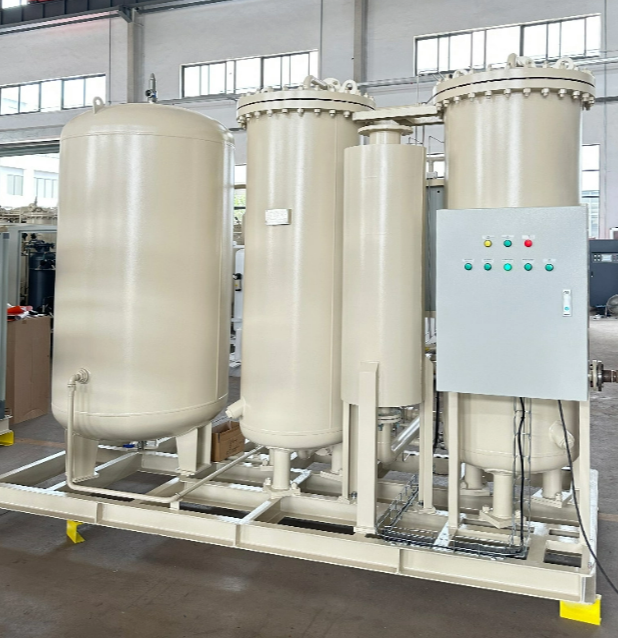
Evaluating the physical footprint helps you implement psa oxygen gas generators successfully. You must understand the ancillary equipment required to support the main skid. Proper infrastructure guarantees long-term reliability.
Implementation carries specific risks. The zeolite molecular sieve degrades rapidly if exposed to liquid water, sustained high humidity, or compressor oil. Contamination permanently ruins the pore structure. For PSA oxygen applications requiring moisture levels down to -40°C pressure dew point (Class 2 or below), a desiccant air dryer is mandatory — refrigerated dryers alone cannot achieve this level of dryness. For oil control, coalescing filters remove liquid oil and aerosol, while an additional activated carbon filter stage is required to effectively remove oil vapor. Particulate filters remove dust particles progressively, with final filtration down to 0.01 micron or finer. Skimping on pre treatment significantly increases the risk of premature equipment failure.
You can source compressed air in two different ways depending on your space and budget.
Internal (All-in-One): These units feature integrated oil-free compressors inside the cabinet. They work best for tight spaces and lower flow rates, typically between 0.5 to 3 Nm³/h (approximately 9–53 L/min). Facilities prefer them for plug-and-play simplicity.
External (Modular): These systems utilize the facility‘s existing compressed air network. They prove ideal for medium to heavy industrial applications requiring 3 to 50 Nm³/h or more. You simply connect the generator to your existing plant air, provided the air quality meets the strict ISO standards mentioned above.
The twin-tower skid acts as the core separation unit. It houses the valves, piping, and the zeolite beds. Right next to it sits the downstream oxygen receiver tank. This buffer tank dampens flow pulsations caused by the alternating tower cycles. It ensures you receive a perfectly steady downstream delivery pressure at your application point.
Modern generators rely on an integrated Programmable Logic Controller (PLC). The PLC manages automated monitoring across the entire system. It tracks live gas purity, internal pressure drops, and cycle timing. If purity drops below your designated threshold, the PLC triggers an alarm or automatically vents the off-spec gas. This automation prevents contaminated gas from reaching your critical processes.
Framing the financial justification helps management approve the transition to on-site generation. You must balance the upfront capital expenditure against long-term operational savings.
Higher purity requirements dictate longer adsorption times or higher pressures. This inherently lowers the total volume yield of the machine. Specifying 95% purity when an application only requires 90% creates a financial trap. It artificially inflates both your capital costs and your daily operational costs. You must test your specific application to find the minimum viable purity. Purchasing a larger compressor to hit an unnecessary purity level wastes budget.
These systems require straightforward but strict maintenance routines. Filter elements upstream of the generator require replacement every 6 to 12 months. Neglecting these filters can introduce moisture or contaminants into the system. Under ideal feed air conditions meeting ISO 8573-1:2010 Class 1.2.1, Zeolite 13X can theoretically last 30,000 to 40,000 continuous hours — roughly 3.5 to 4.5 years of 24/7 operation before requiring repacking. However, actual lifespan depends heavily on feed air quality, operating temperature, and cycling frequency. Any ingress of liquid water, excessive moisture, or oil contamination can dramatically shorten this lifespan.
Transitioning away from delivered gas eliminates an entire hidden stack of expenses. You no longer pay the base bulk gas cost. You immediately stop paying monthly cylinder rental fees. You eliminate hazardous transport (ADR) handling fees. You also wipe out the administrative overhead of managing continuous purchase orders and delivery schedules.Facilities typically achieve ROI in 6 to 24 months for continuous high volume operations, with 12 to 36 months being a more realistic range for typical industrial applications depending on daily oxygen consumption, local electricity rates, and current delivered gas costs. The exact timeline depends heavily on your current daily gas volume usage.
Various industries leverage on-site generation to protect their profit margins and improve process control. Here are a few specialized examples:
Biogas & Dairy Digesters: Operators micro-dose oxygen into anaerobic digesters. This precise oxygen level controls desulfurization. It optimizes the microbial environments, making biogas production much more efficient.
Glass Blowing & Manufacturing: Artisans and industrial glass plants require clean, high-heat combustion gas. On-site generation provides this without cylinder changeover interruptions, preventing costly temperature drops in the furnace.
Aquaculture & Water Treatment: High-density fish farming operations rely on dissolved oxygen for stock survival. Municipal water treatment plants use oxygen to suppress harmful bacterial growth in wastewater. On-site generation provides an unbreakable supply chain for these critical environmental controls.
Transitioning from gas procurement to gas production offers massive operational advantages. It permanently removes delivery logistics, rental fees, and hazardous handling protocols from your facility. However, the success of a PSA gas generator installation hinges heavily on preparation. You must accurately audit your current peak flow demands. You must also commit to ensuring pristine feed air quality to protect the internal molecular sieves. Rushing the specification process leads to oversized equipment and wasted capital.
We advise you to conduct a comprehensive site gas audit immediately. Measure your exact pressure requirements, track your peak flow rates, and determine your absolute minimum acceptable purity. Use this data as your baseline. Completing this required next step prepares you to request accurate vendor sizing and quotes.
A: Standard oxygen PSA systems peak around 95% purity. Ambient air contains roughly 1% argon. During the adsorption process, argon concentrates alongside the oxygen because the zeolite does not easily trap it. Reaching 99% or higher requires specialized, secondary purification processes. These secondary steps remain highly cost-prohibitive for most standard industrial applications.
A: Liquid water or compressor oil causes catastrophic failure of the zeolite pores. Oil coats the surface, permanently blinding the material so it can no longer adsorb nitrogen. Water breaks down the crystalline structure. Once contaminated, the sieve cannot regenerate. You must completely replace the internal zeolite, reinforcing the strict need for ISO Class 2.4.1 filtration.
A: The noise primarily stems from the exhaust and desorption phase when pressurized nitrogen vents into the atmosphere. Most modern industrial systems utilize integrated heavy-duty mufflers and silencers. These components suppress the exhaust blast, typically keeping operational noise levels between 75 and 85 decibels. This allows safe installation on most active manufacturing floors.


